
Contents
HMRC announcement, 8 June 2026.
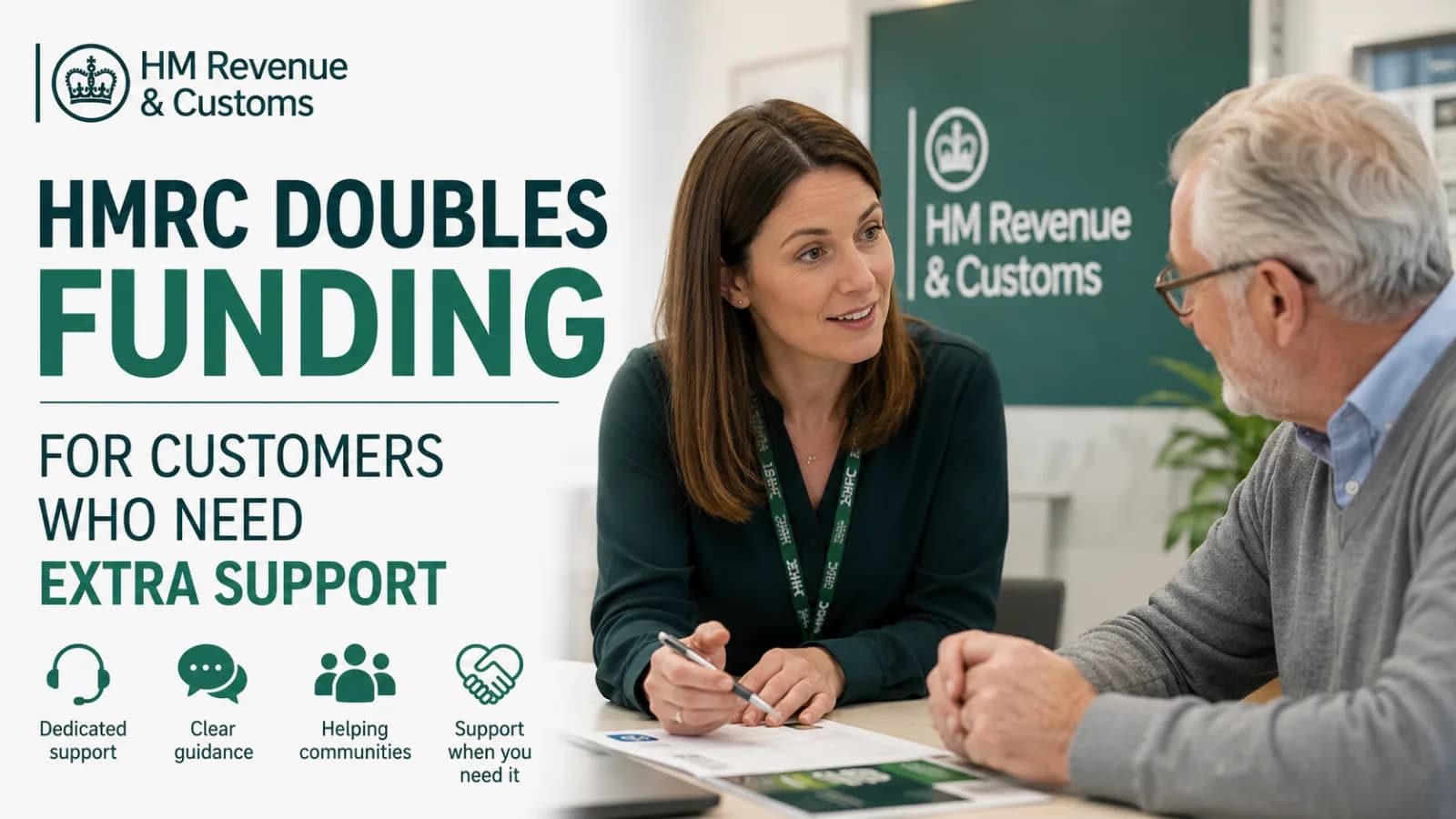
HMRC is doubling its grant funding for voluntary and community organisations that help people who struggle to deal with their tax affairs. The new settlement is worth £11.18 million over three years, £3.73 million a year, covering April 2027 to April 2030. That compares with £5.5 million for the current funding round, which runs from April 2024 to April 2027.
The money pays for free, independent, expert help for the people who find it hardest to deal with HMRC on their own, whether because of disability, ill health, language barriers or digital exclusion. Between April 2025 and April 2026 alone, more than 43,000 customers received support through the scheme.
What is changing
The doubling of the fund means voluntary sector organisations can plan around three years of guaranteed money rather than scraping by year to year. Bidding for the new round opened on 8 June 2026 through the GOV.UK grants portal, with applications closing on 3 July 2026, and the successful organisations will be announced later in 2026. Funded bodies must provide independent, tailored support and meet Cabinet Office compliance standards along with HMRC's own due diligence checks.
Announcing the funding, Exchequer Secretary Dan Tomlinson said the money "means customers who may be struggling with their tax affairs are able to get the help they need".
Who counts as needing extra support
Many people struggle to manage their tax for reasons that have nothing to do with willingness to pay. HMRC's definition covers people who find it hard to understand their tax obligations, those with complex needs, people who are digitally excluded and cannot use online services, and those who need help claiming entitlements they are due. In practice that includes people dealing with serious or mental ill health, disability, bereavement, domestic abuse, homelessness, low literacy or English as a second language. The funded organisations exist to make sure these customers are not left behind as HMRC moves more of its services online.
What help the funded charities provide
Grant-funded charities provide free, independent help with tax problems: understanding letters from HMRC, completing forms and returns, sorting out tax debts, claiming refunds and entitlements, and acting as a bridge between the customer and HMRC. Help is often available by phone or in person, which matters enormously for people who cannot manage online accounts. Because the organisations are independent of HMRC, people who are anxious or distrustful of the tax authority are often far more willing to engage with them, which is precisely why the model works.
How to get help now
You do not need to wait for the new funding round to get support. If you or someone you care for needs extra help, you can ask for HMRC's Extra Support Team when you contact HMRC through any of its normal channels; advisers are trained to spot when someone needs a different kind of service and can offer longer calls, video appointments and specialist support. Alternatively, you can go straight to one of the grant-funded voluntary organisations for independent help.
It is also worth ruling out the simple stuff first. A surprising number of "tax problems" turn out to be a wrong tax code or an unclaimed refund. Our tax code checker explains what your code means in plain English, and our tax refund checker helps you work out whether HMRC owes you money. For step-by-step explainers written for non-experts, our guides section covers the most common situations.
The bigger picture
As HMRC pushes more customers towards digital self-service, the risk is that people who cannot use those channels fall through the cracks, miss deadlines and rack up penalties for problems they never understood. Doubling this funding is an acknowledgement of that risk. For anyone supporting a vulnerable friend or relative with their tax, the practical message is straightforward: free, independent help exists, and a problem raised early is almost always cheaper and quicker to fix than one left in a drawer.
Source: GOV.UK - official announcement
Figures and policies can change. Always confirm the latest position on GOV.UK.
Read next
More Benefits →
Need tax help? Gen Zs wish they had learnt basics about tax
Summer jobseekers urged to use the HMRC app to demystify tax and money matters

Emergency Tax Codes Explained: Why You Are on One and How to Get Your Money Back
An emergency code ends W1, M1 or X and taxes you as though every pay period were your first. On a salary it usually…

Benefits for Single Parents in the UK: What You Can Claim (2026)
A clear, compassionate guide to benefits for single parents in the UK - from Universal Credit and Child Benefit to free…
Rather someone else did it?
Partner linksFixed-fee services where a qualified accountant prepares and files your return.
TaxScouts
A real accountant files your return for one fixed fee.
Fixed fee, typically about £169 per return
Get my return doneGoSimpleTax
DIY Self Assessment software that checks for missed savings.
From about £54.99 per tax year
File it myselfWe may earn a commission if you sign up through one of these links. It never changes what we calculate, what we recommend, or the order they appear in.