Business Finance
Self-Employed Tax: A Beginner's Guide (2026/27)
Just gone self-employed? Here's everything you need to know about tax - what you'll pay, when, how to register, what you…

This self employed tax calculator estimates the Income Tax and Class 4 National Insurance you owe on your profits for the 2026/27 tax year (6 April 2026 to 5 April 2027). Enter your profit (turnover minus allowable expenses) and it shows your tax bill, your NI, and what you actually keep.
It is built for sole traders, freelancers and side-hustlers who file a Self Assessment return and want a quick, honest figure before the 31 January deadline lands. The maths below is laid out in full so you can see exactly how the result is reached.
Sole trader? Enter your figures and your tax updates instantly.
Gross personal contributions reduce the profit your Income Tax is charged on.
If your profit is below the small-profits threshold () Class 2 NI isn't due, but paying it voluntarily protects your State Pension and benefits.
For sole traders: Income Tax on profits + Class 4 NI (+ optional Class 2). Tax year 2026/27.
Total tax & NI
2026/27 · you keep of your profit
per month
per week
per day
effective tax rate
marginal rate
Estimate only - not tax advice. Excludes payments on account, student loans & trading allowance.
Personal allowance: · reduced by
| Band | Rate | Profit taxed | Tax |
|---|---|---|---|
The Self-Employed Tax Calculator does more than show a number. Below your result it explains what your figures mean in practice - your effective and marginal rates, any allowances or thresholds you are close to, and the specific steps to take next. Enter your details above and the guidance updates to match your situation.
Do this next, in order
Estimates only - not financial or tax advice. Confirm figures on GOV.UK or with an adviser.
Your current profit () sits inside this range.
| Scenario | Tax & NI | Take-home | Keep | |
|---|---|---|---|---|
Next steps
Income Tax calculator
Tax on any income
Salary calculator
Compare to employed take-home
VAT calculator
If you're VAT-registered
Browse all tax calculators or read our tax guides.
Pop your annual profit into the tool above and it returns your Income Tax, your Class 4 National Insurance and your take-home figure for 2026/27. Profit means your turnover after you have taken off allowable business expenses, not your total invoiced income, so get that number right first.
As a sole trader you pay two things on your profits: Income Tax and Class 4 National Insurance. They are worked out separately, on the same profit figure, then added together. The plain-English formula is:
Total bill = Income Tax on taxable profit + Class 4 National Insurance
First, Income Tax. Everyone gets a tax-free Personal Allowance of £12,570. You subtract that from your profit to get your taxable profit, then apply the bands: 20% on the first £37,700 of taxable profit (the basic rate), 40% on taxable profit between £37,700 and £125,140 (the higher rate), and 45% above £125,140. These are the rates for England, Wales and Northern Ireland; Scotland is different and covered below.
Second, Class 4 National Insurance. You pay nothing on profits below the Lower Profits Limit of £12,570. Between £12,570 and the Upper Profits Limit of £50,270 the rate is 6%, and above £50,270 it drops to 2%. In notation: Class 4 = 6% × (profit up to £50,270 − £12,570) + 2% × (profit above £50,270).
One important point on the Personal Allowance: if your profit (strictly, your adjusted net income) climbs above £100,000, the £12,570 allowance is cut by £1 for every £2 over that line, disappearing entirely at £125,140. That creates an effective 60% marginal rate in that band, which our 60% tax trap calculator explains in detail.
You can check the official figures at the gov.uk self-employed National Insurance page and the gov.uk Income Tax rates page.
Say you are a freelance designer who invoiced £42,000 and had £7,000 of allowable expenses, leaving £35,000 profit. Here is the full sum.
Now a consultant clearing £60,000 profit, which tips into the higher-rate band.
Notice how the NI rate actually falls from 6% to 2% once you cross £50,270, while the Income Tax rate jumps from 20% to 40% at the same point. The two move in opposite directions, which is why your overall marginal rate as a sole trader is around 42% in the higher band, not 46%.
| Item | 2026/27 figure |
|---|---|
| Personal Allowance | £12,570 |
| Basic rate (20%) | Taxable profit £0 – £37,700 |
| Higher rate (40%) | Taxable profit £37,700 – £125,140 |
| Additional rate (45%) | Taxable profit above £125,140 |
| Class 4 NI Lower Profits Limit | £12,570 |
| Class 4 NI Upper Profits Limit | £50,270 |
| Class 4 main rate | 6% (£12,570 – £50,270) |
| Class 4 higher rate | 2% (above £50,270) |
| Class 2 weekly rate (voluntary) | £3.65 |
Figures checked against gov.uk for the 2026/27 tax year. For a breakdown of just the Income Tax or just the NI portion, our Income Tax calculator and National Insurance calculator show each in isolation.
If you live in Scotland, your self-employed Income Tax uses the Scottish rates and bands, which run from a 19% starter rate up to a 48% top rate, rather than the 20/40/45 structure above. The Personal Allowance of £12,570 is still UK-wide, and Class 4 National Insurance is identical across the whole UK, so only the Income Tax half changes. The Scotland tax calculator applies the Scottish bands for you.
This trips a lot of people up. Since 2024/25, if your profits are at or above the Small Profits Threshold you are treated as having paid Class 2 and still build up your State Pension and benefit entitlement, but the charge itself is £0. You only pay Class 2 if you choose to, at £3.65 a week, which is usually worth it if your profits are below the threshold and you want to protect your National Insurance record. It is one of the cheapest ways to keep a qualifying year.
The biggest shock for first-time filers is payments on account. If your bill is over £1,000, HMRC asks you to pre-pay next year's tax in two instalments: 50% with your 31 January bill and another 50% by 31 July. In your first year that can mean handing over 150% of your actual tax in one go. Our payments on account calculator shows the real cash you will need.
Other frequent slip-ups: forgetting that Class 4 NI is on top of Income Tax (so people under-save); treating turnover as profit; missing the registration deadline of 5 October after the tax year you started; and not setting money aside monthly. A safe rule of thumb is to park 25% to 30% of every payment in a separate pot. If you are weighing up going limited or staying a sole trader, compare the two routes with the PAYE vs self-employed calculator.
You report all of this through a Self Assessment return (form SA100) by midnight on 31 January following the tax year. The self assessment tax calculator walks through the whole return, including any other income.
These figures are estimates for guidance only and are not personal tax or financial advice. Your own position may differ, so check with HMRC or a qualified accountant before acting.
This is for sole traders and anyone with self-employed profit who needs to know the total due — Income Tax and National Insurance together — from one profit figure. Self-employed NI works differently from an employee’s: Class 4 is charged at 6% on profit between £12,570 and £50,270 and 2% above that, and Class 2 is now voluntary below the small profits threshold of £7,105.
That Class 2 point is worth pausing on. If your profit is below the threshold you no longer have to pay it — but paying it voluntarily at £3.65 a week still buys a qualifying year towards the State Pension, which is usually excellent value. It is one of the few genuinely easy wins in the system.
Carry on with the self assessment tax calculator, work out instalments with the payments on account calculator, or if your trade is a sideline check the side hustle tax calculator.
Just gone self-employed? Here's everything you need to know about tax - what you'll pay, when, how to register, what you…
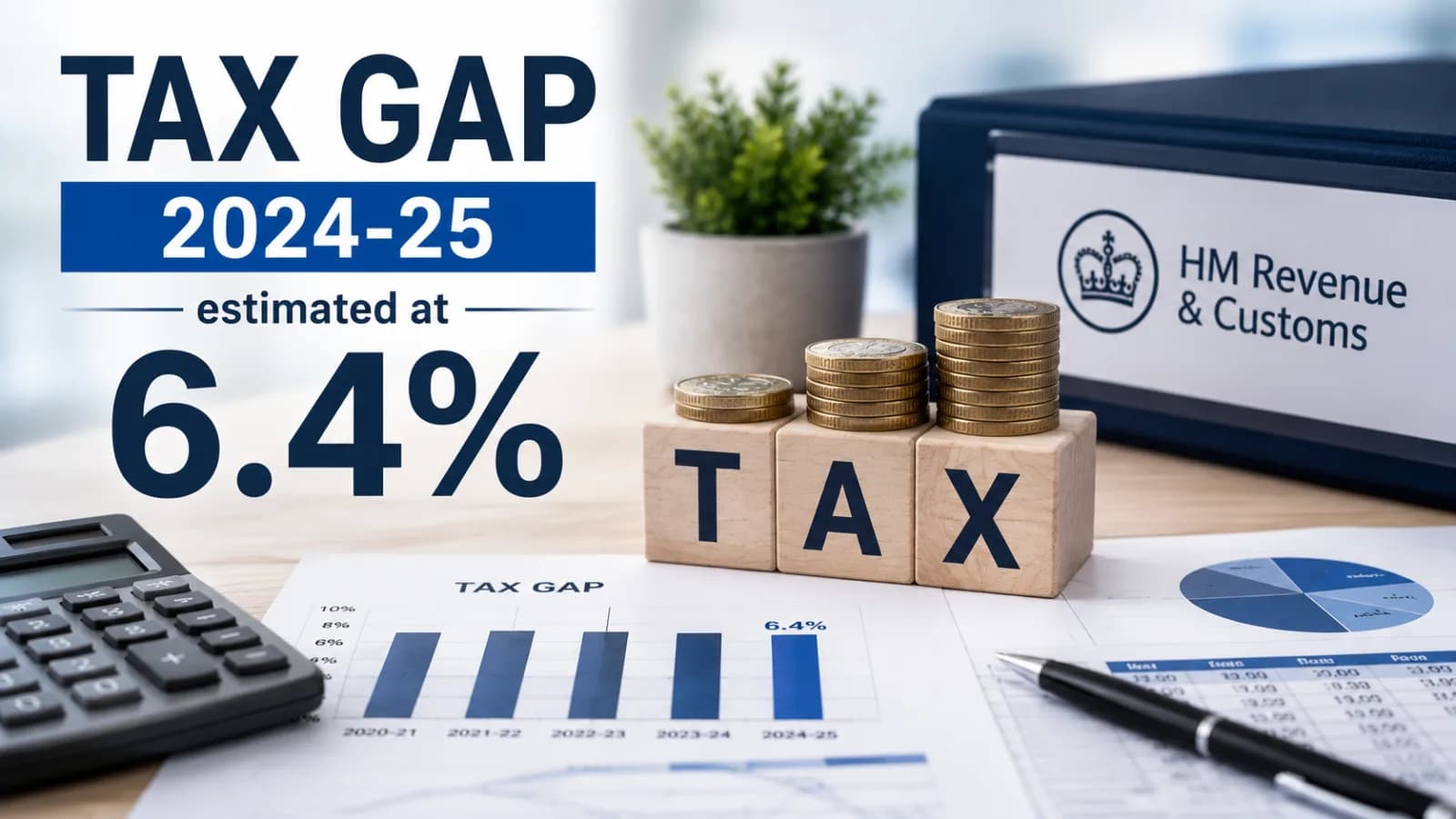
HMRC publishes the estimated tax gap for the 2024 to 2025 tax year.
If you need to file a Self Assessment return for the first time, you must tell HMRC by 5 October following the end of…
If you keep your own books, these are the packages that handle Self Assessment and Making Tax Digital.
The freelancer and contractor favourite, free with some bank accounts.
From £0 with a NatWest, RBS or Mettle account, otherwise about £19/mo
See FreeAgentThe big all-rounder with the deepest MTD track record.
From about £10/mo, frequent 90% off intro offers
See QuickBooksThe scale-up choice once you have staff, stock or VAT.
From about £15/mo
See XeroWe may earn a commission if you sign up through one of these links. It never changes what we calculate, what we recommend, or the order they appear in.