
Contents
HMRC announcement, 23 June 2026.
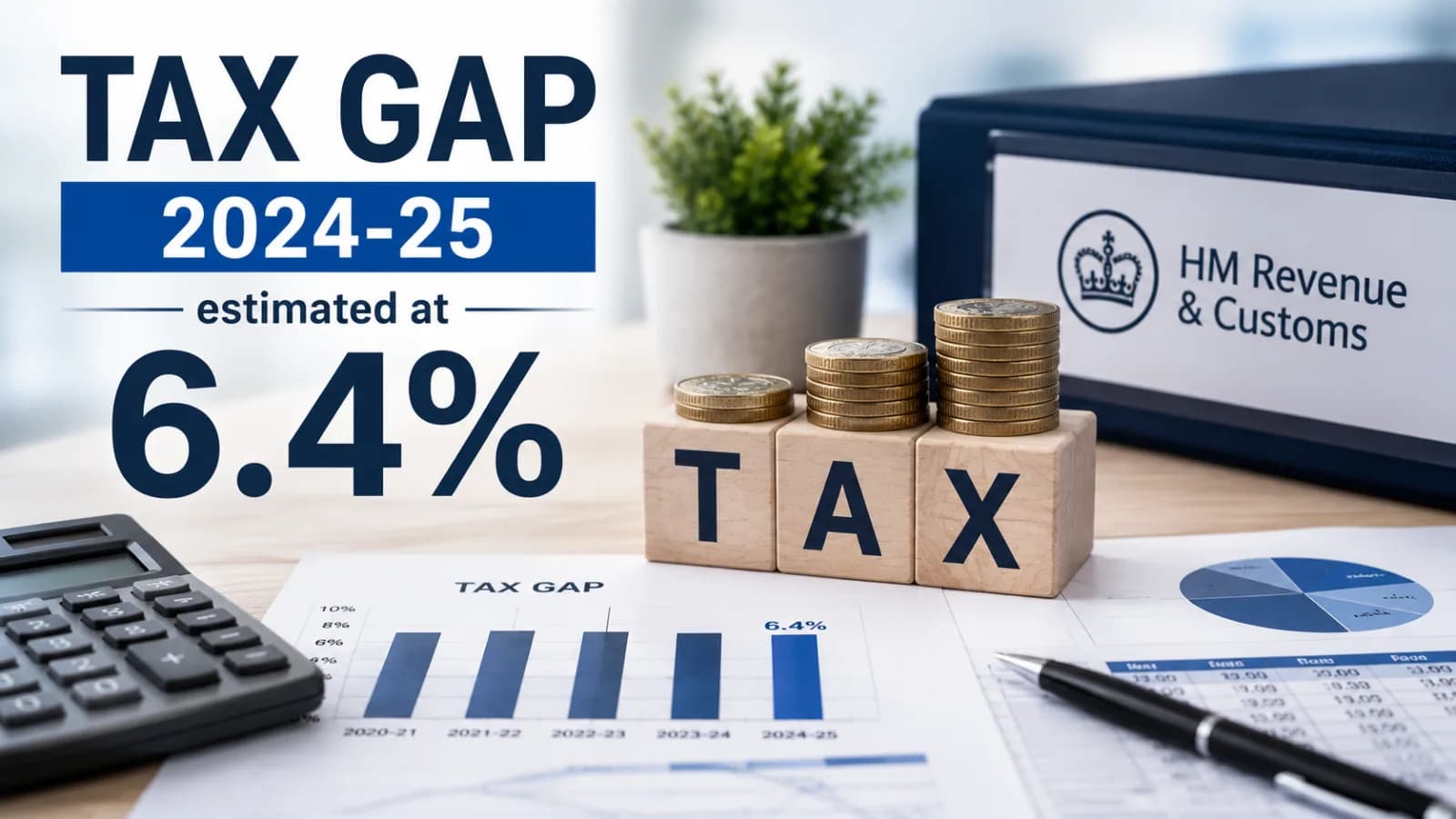
HMRC has published its estimate of the tax gap for the 2024 to 2025 tax year at 6.4%, which works out at £59.2 billion of tax that was owed but not collected. Put the other way round, HMRC collected £865.2 billion, or 93.6% of all the tax that was theoretically due. The figure is closely watched because it shapes where HMRC focuses its compliance work, and because it is the standing justification for new reporting rules such as Making Tax Digital.
The long-term trend is downward. The gap has fallen from 7.5% in 2005-06, although recent years have been revised upwards as better data arrives: the 2023-24 estimate was revised from 5.3% to 6.0% (£52.8 billion), and 2022-23 now stands at 6.6%.
What the "tax gap" actually means
The tax gap is the difference between the amount of tax that should, in theory, be paid and the amount HMRC actually collects. It is not one single behaviour. It bundles together honest mistakes, carelessness, deliberate evasion, legal avoidance, non-payment by businesses that go bust, and the hidden cash economy. A 6.4% gap means the vast majority of tax due is paid correctly and on time, but £59.2 billion is still a very large sum, roughly comparable to a major department's annual budget.
The numbers behind the headline
The behavioural breakdown is revealing. Failure to take reasonable care, essentially carelessness and sloppy record keeping, accounts for 35% of the gap, the largest single slice. Straightforward error adds another 16%, and deliberate evasion accounts for 12%. In other words, around half of the missing tax comes not from criminality but from people and businesses getting things wrong.
By tax type, the gap is not spread evenly:
| Tax | Share of the tax gap | Gap as % of that tax due |
|---|---|---|
| Corporation Tax | 35% | 18.1% |
| Income Tax, NICs and Capital Gains Tax | 35% | 4.0% |
| VAT | 20% | 6.6% |
| Excise duties | - | 5.5% |
Corporation Tax stands out: nearly one pound in every five theoretically due goes unpaid, while income tax and National Insurance, mostly collected automatically through PAYE, show a far smaller 4.0% gap. That contrast explains a lot about where HMRC points its resources.
Can the gap ever reach zero?
Realistically, no. The estimate is built from audits, random enquiry programmes and statistical modelling, which is also why past years get revised as fuller data arrives. Some of the gap comes from businesses that fail owing tax that can never be recovered, and some from honest disputes about how the rules apply. What the annual publication really measures is direction of travel, and whether the billions spent on compliance are shrinking the problem faster than the economy and the tax system grow it. The distinction between the components matters too: avoidance is legal but contested planning, evasion is criminal, and error is neither, yet all three end up in the same headline number.
Small businesses in the spotlight
Small businesses account for 62% of the total tax gap, and around half of the small business share relates to Corporation Tax. That does not mean small firms are dishonest as a group; it reflects the reality that millions of small businesses do their own books, handle their own returns and make more mistakes than large firms with finance departments. But it does mean small businesses can expect to remain the main focus of HMRC's compliance activity, from nudge letters to full enquiries.
What HMRC is doing about it
The Spending Review 2025 allocated £1.7 billion over four years to compliance, funding 5,500 additional compliance staff and 2,400 debt management staff. Measures announced since the Autumn Budget 2024 are expected to raise £10 billion a year by 2029-30. HMRC's compliance work in 2024-25 alone collected or protected £48 billion. Expect more data-matching, more one-to-many campaigns and continued expansion of digital reporting.
What it means for you
For most people the lesson is simple: file accurately and on time, and keep good records, because carelessness rather than fraud is the biggest driver of the gap and the easiest thing for HMRC to detect. If you are self-employed, our self-employed tax calculator helps you check what you should be setting aside, and if you earn extra income on the side, our side hustle tax calculator shows when that income becomes taxable. The record-keeping changes coming under Making Tax Digital are a direct response to this gap, and our guide to Making Tax Digital for Income Tax explains what is changing and when.
Source: GOV.UK - official announcement
Figures and policies can change. Always confirm the latest position on GOV.UK.
Read next
More Taxes →
Self-Employed Tax: A Beginner's Guide (2026/27)
Just gone self-employed? Here's everything you need to know about tax - what you'll pay, when, how to register, what you…
Self Assessment: register by 5 October or face a penalty
If you need to file a Self Assessment return for the first time, you must tell HMRC by 5 October following the end of…
Side hustle tax: the £1,000 trading allowance and what HMRC already sees
You can earn £1,000 of gross trading income a year tax-free under the trading allowance. Online platforms including…
Rather someone else did it?
Partner linksFixed-fee services where a qualified accountant prepares and files your return.
TaxScouts
A real accountant files your return for one fixed fee.
Fixed fee, typically about £169 per return
Get my return doneGoSimpleTax
DIY Self Assessment software that checks for missed savings.
From about £54.99 per tax year
File it myselfWe may earn a commission if you sign up through one of these links. It never changes what we calculate, what we recommend, or the order they appear in.