

Contents
- Services have no reporting threshold. Goods do.
- Employed or self-employed? The app’s label is not the answer
- The trading allowance, and when £1,000 beats claiming expenses
- Calculator: Self-Employed Tax Calculator
- Registering, and the 5 October deadline people miss
- Expenses, and the mileage rate that changed in 2026
- National Insurance when you work for yourself
- Year two: why the January bill is 150% of the tax you owed
- Never registered? What to do before HMRC writes to you
App income from driving, delivery or freelancing is reported to HMRC from the first pound you earn. There is no threshold. The exclusion everyone quotes, fewer than 30 sales and under about £1,700 a year, covers the sale of goods only. HMRC’s guidance for platform sellers lists “provide personal services, like delivering food, driving a taxi, or freelancing” as a separate activity from “sell goods”, and attaches the exclusion to sales of goods alone. So if you drive for a ride-hailing app, ride for a delivery app, or take design, writing or admin work through a freelancing marketplace, the platform passes your details and your earnings to HMRC once a year however small the figure is.
Being reported is not the same as owing tax. GOV.UK says it plainly: “A platform reporting your details to HMRC does not automatically mean you owe tax.” What it does mean is that HMRC holds a number with your name against it. If you have never told them you were trading, the mismatch does the talking for you.
Services have no reporting threshold. Goods do.
The rules that make platforms report were designed around online marketplaces, so the carve-out was written for people clearing out a wardrobe. It does not travel across to gig work. To be excluded from a report you have to be under both limbs of the goods test, and the test only exists for goods in the first place.
| What you do on the app | Is there a reporting threshold? | What HMRC receives |
|---|---|---|
| Sell goods (secondhand clothes, crafts, resold items) | Yes. You are excluded if you make fewer than 30 sales of goods in a calendar year and receive less than €2,000 (about £1,700) for them | Nothing, if you are under both limits |
| Provide personal services (delivering food, driving a taxi, freelancing) | No threshold at all | Your details and your income, from the first pound |
| Rent out property or transport through a platform | No goods threshold applies | Your details and your income |
Two practical points follow. First, the report runs on the calendar year, not the tax year. Platforms collect information for 1 January to 31 December and send it to HMRC by the following 31 January. Your tax return runs 6 April to 5 April, so the two figures will never match line for line, and you should not try to force them to. Second, one bad month does not save you. A courier who earned £60 in a single week in December is on the same report as a full-time driver.
If your app work sits alongside other bits and pieces of income, our guide to side hustle tax and the £1,000 trading allowance covers what HMRC already sees from other sources.
Employed or self-employed? The app’s label is not the answer
Almost everyone doing app work is self-employed for tax. GOV.UK defines it simply: “A person is self-employed if they run their business for themselves and take responsibility for its success or failure.” The indicators it lists are the ones that describe gig work exactly. You choose when to switch the app on, nobody supervises the individual job, you are not paid holiday or sick pay, and no tax is taken before the money reaches you.
The label on the contract is not decisive, and neither is the label the app uses. HMRC’s guidance says it “may regard someone as self-employed for tax purposes even if they have a different status in employment law”. That is the sentence that resolves the confusion couriers and drivers run into. Winning worker rights in an employment tribunal, or being paid holiday pay by a delivery company, does not by itself make you an employee for tax. The two systems are decided separately, on different tests.
The test that matters day to day is much blunter. Look at what arrives in your account. If nothing was deducted and there is no payslip and no P60, no one is running PAYE for you, and the tax on that money is yours to work out and pay. If you also hold a normal job, our comparison of PAYE versus self-employed shows how the two sets of rules interact, and the PAYE vs self-employed calculator puts numbers on it.
The trading allowance, and when £1,000 beats claiming expenses
The trading allowance is a tax exemption of up to £1,000 a year on gross trading income. If your gross app income for the tax year is £1,000 or less, it is covered and you do not need to report it. Above £1,000 you have a choice: deduct the allowance instead of your expenses, or deduct your actual expenses. You cannot do both. GOV.UK is explicit that “you cannot deduct any other expenses or allowances if you claim the allowances”.
The rule of thumb is short. If your allowable expenses for the year come to less than £1,000, claim the allowance. If they come to more, claim the expenses. Most delivery drivers are in the second camp because of mileage. Most desk-based freelancers are in the first.
Worked example: Marcus, freelance designer. Marcus has a PAYE job paying £31,000 and takes design work through a freelancing platform in the evenings. In 2026/27 the platform pays him £3,900 gross. His allowable costs are software subscriptions of £220, a share of his broadband of £140 and stock images of £120, so £480 in total.
- Claiming actual expenses: £3,900 − £480 = £3,420 taxable profit
- Claiming the trading allowance: £3,900 − £1,000 = £2,900 taxable profit
The allowance leaves £520 less profit in charge. His salary already uses his personal allowance and he stays inside the basic rate, so the tax on that £520 would have been 20%. Choosing the allowance saves him £104 and removes the need to keep receipts for the year. His self-employment profit of £2,900 is below the £12,570 Class 4 threshold, and Class 4 is charged on self-employment profits rather than on his total income, so the salary does not drag those profits into National Insurance.
Work it out for your own figures
Open the full Self-Employed Tax Calculator →Your business
Sole trader? Enter your figures and your tax updates instantly.
Gross personal contributions reduce the profit your Income Tax is charged on.
If your profit is below the small-profits threshold () Class 2 NI isn't due, but paying it voluntarily protects your State Pension and benefits.
For sole traders: Income Tax on profits + Class 4 NI (+ optional Class 2). Tax year 2026/27.
Total tax & NI
2026/27 · you keep of your profit
- Profit
- Less pension
- −
- Income Tax
- −
- Class 4 NI
- −
- Class 2 NI
- −
- Income after tax
per month
per week
per day
effective tax rate
marginal rate
Estimate only - not tax advice. Excludes payments on account, student loans & trading allowance.
How your Income Tax is built up
Personal allowance: · reduced by
| Band | Rate | Profit taxed | Tax |
|---|---|---|---|
What your Self-Employed Tax Calculator result means
The Self-Employed Tax Calculator does more than show a number. Below your result it explains what your figures mean in practice - your effective and marginal rates, any allowances or thresholds you are close to, and the specific steps to take next. Enter your details above and the guidance updates to match your situation.
Do this next, in order
Estimates only - not financial or tax advice. Confirm figures on GOV.UK or with an adviser.
Take-home across profit levels
Your current profit () sits inside this range.
Compare saved scenarios
| Scenario | Tax & NI | Take-home | Keep | |
|---|---|---|---|---|
Next steps
Income Tax calculator
Tax on any income
Salary calculator
Compare to employed take-home
VAT calculator
If you're VAT-registered
Browse all tax calculators or read our tax guides.
Registering, and the 5 October deadline people miss
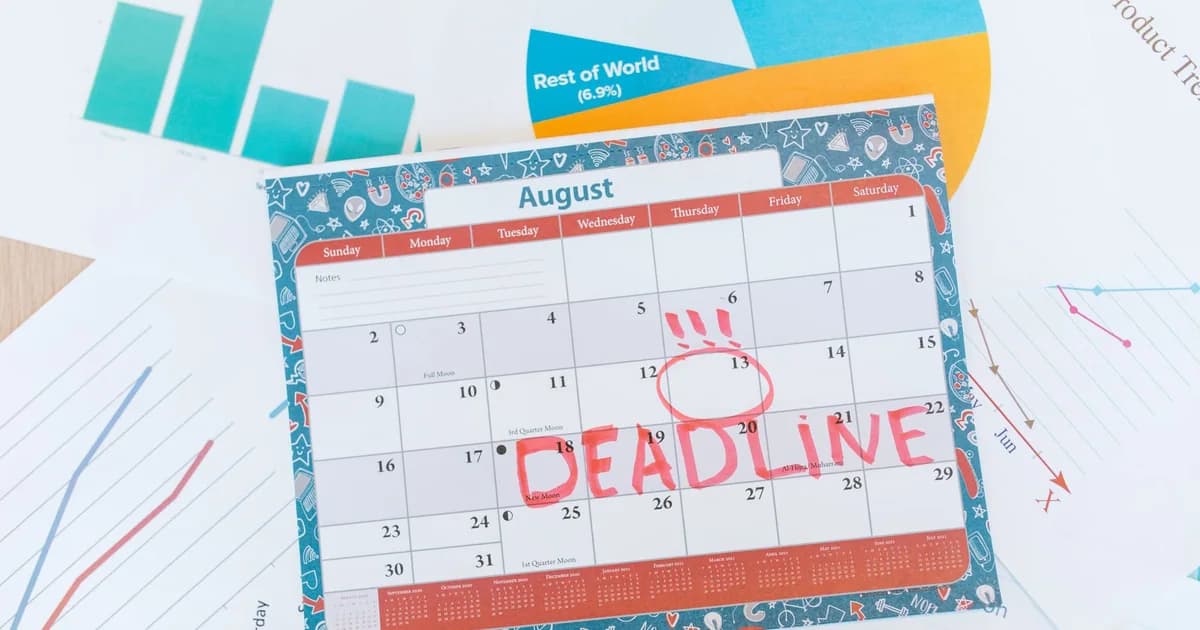
You must register for self assessment as a sole trader if you earn more than £1,000 in a tax year from 6 April to 5 April. The deadline to tell HMRC is 5 October after the end of that tax year. For the 2025/26 tax year that is 5 October 2026, and GOV.UK warns that if you tell HMRC after that date “you could get a penalty”.
This is the deadline that catches gig workers, because it falls nearly four months before the one everybody has heard of. People assume 31 January is the only date, register in December, and find they were already late by two months. If you are unsure whether you need to file at all, run the do I need to file a self assessment checker first, and read our guide on why you need to register by 5 October.
| Deadline | Date for the 2025/26 tax year | What happens if you miss it |
|---|---|---|
| Tell HMRC you need to file | 5 October 2026 | You could get a penalty |
| Paper tax return | Midnight 31 October 2026 | Late filing penalty |
| Online tax return | Midnight 31 January 2027 | £100 immediately, even if no tax is due |
| Pay the tax | Midnight 31 January 2027 | 5% of the unpaid tax at 30 days, again at 6 months, again at 12 months |
| Second payment on account | 31 July 2027 | Interest and late payment penalties |
File more than three months late and daily penalties of £10 start running, up to a maximum of £900. At six months there is a further penalty of 5% of the tax due or £300, whichever is greater, and the same again at twelve months. None of that depends on whether you actually owed anything.
Expenses, and the mileage rate that changed in 2026
You can deduct costs incurred wholly for the business: fuel, parking, insurance, phone bills, stationery, subcontractor costs, website costs. Only the business share of a mixed-use item counts, so if a quarter of your phone use is personal, a quarter of the bill is not claimable.
For anyone who drives, the single biggest deduction is mileage, and the rate went up for 2026/27. Approved mileage rates for cars and vans had been 45p for the first 10,000 miles since 2011. From the 2026 to 2027 tax year they are:
| Vehicle | 2026/27 rate | Previous rate (2011 to 2026) |
|---|---|---|
| Cars and vans, first 10,000 business miles | 55p per mile | 45p per mile |
| Cars and vans, over 10,000 business miles | 25p per mile | 25p per mile |
| Motorcycles | 24p per mile | 24p per mile |
| Bicycles | 20p per mile | 20p per mile |
Two conditions attach to the flat rate. It replaces every running cost of that vehicle, so you cannot also claim fuel, insurance, servicing or capital allowances on it. And once you use flat rates for a vehicle you must keep using them for as long as you use that vehicle in the business. You cannot alternate between mileage and actual costs year to year on the same car, which is why the decision is worth making properly the first time. Our guide to flat rate mileage versus actual costs works through both, and the mileage allowance calculator gives you the figure for a given number of miles.
Worked example: Dionne, delivery driver. Dionne delivers by car through two apps. In 2026/27 the platforms pay her £24,800 gross and she logs 11,200 business miles. She has no other income.
- Mileage: 10,000 × 55p = £5,500, plus 1,200 × 25p = £300. Total £5,800
- Business share of her phone: £180
- Insulated bags, dashcam mount and app equipment: £95
- Total expenses: £6,075
- Taxable profit: £24,800 − £6,075 = £18,725
Income tax: £18,725 − the £12,570 personal allowance = £6,155 taxed at 20% = £1,231. Class 4 National Insurance: £6,155 at 6% = £369.30. Her total bill for the year is £1,600.30. Note what the mileage claim did. Without it her profit would have been £24,525 and her bill £3,108.30, so the log of business miles is worth £1,508 to her, which is the £5,800 claim taxed at 20% plus 6%. Keep it contemporaneously. A reconstructed mileage log is the first thing an enquiry pulls apart. Run your own numbers through the self-employed tax calculator before you file.
National Insurance when you work for yourself
Self-employed National Insurance for 2026/27 works on three numbers. Below £7,105 of profit you pay nothing and build no automatic credit, though you can pay voluntary Class 2 at £3.65 a week to protect your state pension record. Reach £7,105 and Class 2 is treated as having been paid, which means the year counts towards your state pension without you paying anything. Class 4 then starts at £12,570.
| Profit for 2026/27 | Class 2 | Class 4 |
|---|---|---|
| Under £7,105 | Nothing due. Voluntary payment £3.65 a week if you want the year to count | None |
| £7,105 to £12,570 | Treated as paid. Nothing to pay, record protected | None |
| £12,571 to £50,270 | Treated as paid | 6% on profits above £12,570 |
| Over £50,270 | Treated as paid | 6% to £50,270, then 2% above it |
A full year of voluntary Class 2 costs about £190 and can buy a qualifying year towards the state pension, which is usually excellent value if you would otherwise have a gap. If you already hold a PAYE job earning above the primary threshold, your Class 1 contributions will normally cover the year anyway. Our guide to the National Insurance rates for 2026/27 sets out both sides.
Year two: why the January bill is 150% of the tax you owed
This is the shock nobody warns first-time filers about. If your self assessment bill is £1,000 or more, and less than 80% of your tax was collected at source, HMRC asks for payments on account: two instalments towards next year’s tax, each equal to half of what you owed this year, due on 31 January and 31 July.
Take Dionne. Her first return produces a bill of £1,600.30. She has budgeted for £1,600.30. What HMRC asks for on 31 January is:
- Balancing payment for the year just filed: £1,600.30
- First payment on account for the next year: £800.15
- Total due on 31 January: £2,400.45
Then £800.15 more on 31 July. She is not being taxed twice. She is being moved onto a payment pattern, and the pattern costs one and a half years of tax in a single winter. If your income has genuinely fallen you can apply to reduce the payments on account, but reduce them too far and HMRC charges interest on the shortfall. Set the money aside instead: roughly 30% of profit into a separate account is a reasonable working rule for a basic rate gig worker once Class 4 is included. Read payments on account explained and check your own figures with the payments on account calculator.
Never registered? What to do before HMRC writes to you
The trap is the person who has treated app work as casual cash for three or four years. No registration, no returns, an assumption that small amounts do not count. Because services carry no reporting threshold, every one of those years is likely to be sitting in HMRC’s data already, delivered by the platform each January.
Coming forward voluntarily is materially better than waiting. Penalties for an unprompted disclosure are lower than for a prompted one, and the difference is largest where the failure was careless rather than deliberate. The practical steps are the same in every case: pull your annual earnings statements from each platform, rebuild the mileage from delivery records and bank data where you can, register for self assessment on GOV.UK, and file the outstanding years. Read the full HMRC guidance for people selling goods or services on a digital platform so you know exactly what has been handed over.
One last thing worth saying, because it stops people acting. Platform reports do not replace your own records or your own tax calculation. HMRC says so on the same page. The figures the apps send are gross, before commission and before any of your costs. A driver reported as receiving £24,800 may owe tax on £18,725, or on nothing at all. The number on HMRC’s file is the start of the conversation, not the bill. If you are new to all of this, our beginner’s guide to self-employed tax covers the mechanics from registration to first payment.
Frequently asked questions
Does Uber, Deliveroo or Fiverr tell HMRC what I earn?
Is there a £1,700 threshold before gig work gets reported to HMRC?
Do I need to register for self assessment if I only made £900 from an app?
What is the deadline to register for self assessment as a gig worker?
How much mileage can a self-employed delivery driver claim in 2026/27?
Can I claim the £1,000 trading allowance and my fuel and mileage costs?
Why is my second year's January tax bill bigger than the tax I owed?
Read next
More Business Finance →
Self-Employed Tax: A Beginner's Guide (2026/27)
Just gone self-employed? Here's everything you need to know about tax - what you'll pay, when, how to register, what you…
Self Assessment: register by 5 October or face a penalty
If you need to file a Self Assessment return for the first time, you must tell HMRC by 5 October following the end of…
Side hustle tax: the £1,000 trading allowance and what HMRC already sees
You can earn £1,000 of gross trading income a year tax-free under the trading allowance. Online platforms including…
Rather someone else did it?
Partner linksFixed-fee services where a qualified accountant prepares and files your return.
TaxScouts
A real accountant files your return for one fixed fee.
Fixed fee, typically about £169 per return
Get my return doneGoSimpleTax
DIY Self Assessment software that checks for missed savings.
From about £54.99 per tax year
File it myselfWe may earn a commission if you sign up through one of these links. It never changes what we calculate, what we recommend, or the order they appear in.