

Contents
- How is self-employed income taxed in the UK?
- Do I need to register for Self Assessment?
- What National Insurance do the self-employed pay?
- What expenses can I claim?
- When do I pay, and what are payments on account?
- Making Tax Digital is coming
- A simple routine to stay on top
- A worked example: your first year as a sole trader
- Common mistakes beginners make
- Do you actually need to file? Edge cases
- The bottom line
- Self-employed tax: common questions
- Record-keeping: the habit that saves you
Going self-employed is exciting, but the tax side can feel daunting. The good news: once you understand the basics, it's very manageable. This beginner's guide walks through how self-employed tax works in the UK for 2026/27 - what you pay, when, and how to stay on top of it.
How is self-employed income taxed in the UK?
In short: you pay income tax and National Insurance on your profit - your income minus allowable expenses - through Self Assessment once a year, not on your total takings.
As a sole trader, you keep your tax-free Personal Allowance (£12,570), then pay income tax at 20%, 40% or 45% on profit above it, just like an employee. On top, you pay Class 4 National Insurance on profits above the threshold, and a small flat-rate Class 2 contribution may apply. Our Self-Employed Tax Calculator estimates the full bill from your profit.
What a sole trader pays - 2026/27
| Charge | How it applies |
|---|---|
| Personal Allowance | First £12,570 of profit is tax-free |
| Income Tax | 20% / 40% / 45% on profit above the allowance |
| Class 4 NI | Charged on profits above the threshold (main & upper rates) |
| Class 2 NI | Small flat-rate; protects your State Pension record |
| Trading allowance | First £1,000 of self-employed income is exempt |
Do I need to register for Self Assessment?
In short: yes. If you earn more than £1,000 from self-employment in a tax year, you must register with HMRC for Self Assessment and file a tax return.
The £1,000 is the trading allowance - earn less and you generally don't need to report it. Above it, register by 5 October following the end of the tax year in which you started. Once registered, you file a return after the tax year ends. Our Self Assessment deadlines guide covers the key dates and penalties for filing late.
What National Insurance do the self-employed pay?
In short: Class 4 NI on profits above the threshold (at the main and upper rates), plus optional or low-cost Class 2 contributions that protect your State Pension and benefit entitlements.
Class 4 is the bigger cost and is worked out as part of your Self Assessment. Class 2 is a small weekly amount that counts towards your State Pension - worth paying even when optional, to keep your record complete. You can check the effect on your pension with our State Pension Forecast.
What expenses can I claim?
In short: costs incurred "wholly and exclusively" for your business - stock, equipment, business travel, a proportion of home and phone costs, professional fees, and more. Claiming them reduces your taxable profit and therefore your tax.
Keeping good records of expenses is one of the most effective ways to keep your bill down, because every legitimate expense you miss is tax you needn't have paid. Use our free Expense Tracker to log costs as you go. There are also simplified flat-rate options for things like working from home and vehicle mileage, which can be easier than itemising.
When do I pay, and what are payments on account?
In short: your tax is due by 31 January after the tax year. If your bill is over £1,000 and little was collected at source, you'll also make payments on account - advance instalments towards next year's bill, due 31 January and 31 July.
Payments on account catch many first-time filers out, because the first January bill can be 150% of your tax: the balancing payment plus the first payment on account. Our Payments on Account Calculator explains whether they apply and how much to budget. The golden rule is to set aside money as you earn - a rough 25–30% of profit - so the bill never comes as a shock.
Making Tax Digital is coming
In short: from April 2026, self-employed people with qualifying income over £50,000 must keep digital records and send HMRC quarterly updates under Making Tax Digital for Income Tax, with lower thresholds following.
Even if you're below the threshold, building good digital record-keeping habits now will pay off. Check whether and when it applies to you with our MTD Scope Checker, and keep your records free with the MTD Quarterly Record Organiser. Our full MTD guide explains the change in detail.
A simple routine to stay on top
The self-employed people who never stress about tax follow a simple routine: keep business and personal money separate, log income and expenses as they happen, set aside a percentage of every payment for tax, and check their estimated bill regularly. Do that, and Self Assessment becomes a formality rather than a January panic. For the official starting point, see GOV.UK's guide to setting up as a sole trader.
A worked example: your first year as a sole trader
Numbers make this far clearer than rules alone. Imagine you start freelancing partway through the tax year and your turnover is modest - say a few thousand pounds in your first months. You log every payment you receive and every business cost: a laptop, software subscriptions, travel to clients, and a slice of your home and phone bills. Your taxable figure is your turnover minus those allowable expenses - your profit, not your total income.
If that profit stays within your Personal Allowance (£12,570), you may owe little or no income tax, though Class 4 National Insurance can still apply once profit passes its own threshold. As your business grows into a full year, the picture changes: a higher profit means income tax at 20% on the slice above the allowance, plus Class 4 NI. The key lesson first-timers learn the hard way is timing - you earn the money long before the bill arrives, so the discipline of setting aside 25–30% of every payment is what turns a scary January into a non-event. Run your own figures through the Self-Employed Tax Calculator and the National Insurance Calculator to see exactly where you land.
Common mistakes beginners make
Most first-year tax problems are not about complicated rules - they are about a handful of avoidable slip-ups. Watch out for these:
- Spending the tax money. Because there is a long gap between earning and paying, it is tempting to treat all your income as yours. Keep a separate pot for tax from day one.
- Registering late. You must register for Self Assessment by 5 October following the tax year you started. Leave it late and you risk a failure-to-notify penalty.
- Forgetting payments on account. The first January bill can be far bigger than expected because it can include the first advance instalment towards next year. Our Payments on Account Calculator shows whether they apply.
- Missing expenses. Every legitimate cost you fail to claim is tax you needn't have paid. Keep receipts and log costs as you go rather than reconstructing them in January.
- Mixing business and personal money. A single bank account for everything makes record-keeping slow and error-prone. A dedicated business account fixes this instantly.
Do you actually need to file? Edge cases
Not everyone with a bit of extra income has to file, and the rules around the £1,000 trading allowance trip people up. If your self-employed or casual income is £1,000 or less in the tax year, you generally don't need to report it. Cross that and you do. But there are grey areas: a one-off sale of personal possessions is not trading; regular sales with the intention of making a profit usually are. If you are employed and run a small side business, your job is taxed through PAYE while the side income goes on a return - and because your Personal Allowance is often used up by the job, that side profit can be taxed from the first pound.
If you're genuinely unsure whether HMRC expects a return from you, check first with our Do I Need to File a Tax Return? tool, and if you run an online shop or weekend gig, the Side Hustle Tax Calculator is built for exactly that situation.
The bottom line
Self-employed tax comes down to a few habits: register when you cross £1,000, claim every allowable expense, set money aside for the January bill, and watch for payments on account and MTD. Estimate your bill any time with the Self-Employed Tax Calculator, and you'll always know where you stand.
Self-employed tax: common questions
How much tax will I pay as a self-employed person? You pay income tax and Class 4 National Insurance on your profit above the Personal Allowance, at the same rates as employees. As a rough guide, setting aside 25–30% of your profit usually covers it, though higher earners should save more. Use the Self-Employed Tax Calculator for your exact figure.
Do I pay tax in my first year of self-employment? You don't pay anything immediately, but you'll owe tax on your first year's profit by the 31 January after that tax year ends - and possibly payments on account on top. Because there's a delay, it's vital to set money aside from day one rather than spending it.
What's the difference between a sole trader and a limited company? A sole trader and their business are legally the same, with profits taxed through Self Assessment. A limited company is a separate legal entity that pays corporation tax, with the owner taking money as salary and dividends. Companies offer limited liability but more admin - see our salary vs dividends guide.
Can I be employed and self-employed at the same time? Yes, and it's very common. Your employer handles tax on your job through PAYE, and you report your self-employed profit through Self Assessment. Your Personal Allowance is usually used by your employment, so your self-employed profit is often taxed from the first pound.
Record-keeping: the habit that saves you
If you take one thing from this guide, make it this: keep good records from the start. Log every bit of income and every business expense, keep your receipts, and use a separate bank account for the business so nothing gets muddled. Good records mean you claim every allowable expense (lower tax), you can see your real profit at any time, and Self Assessment - or quarterly MTD updates - becomes a quick job rather than a dreaded one. Our free Expense Tracker and MTD Quarterly Record Organiser are built exactly for this, and they cost nothing to use.
Once you're set up, it's worth checking your freelancer tax health score to spot anything you've missed.
Frequently asked questions
How is self-employed income taxed in the UK for 2026/27?
Do I need to register for Self Assessment when I go self-employed?
When do I pay my self-employed tax, and what are payments on account?
What expenses can I claim as a self-employed person?
Can I be employed and self-employed at the same time?
Read next
More Business Finance →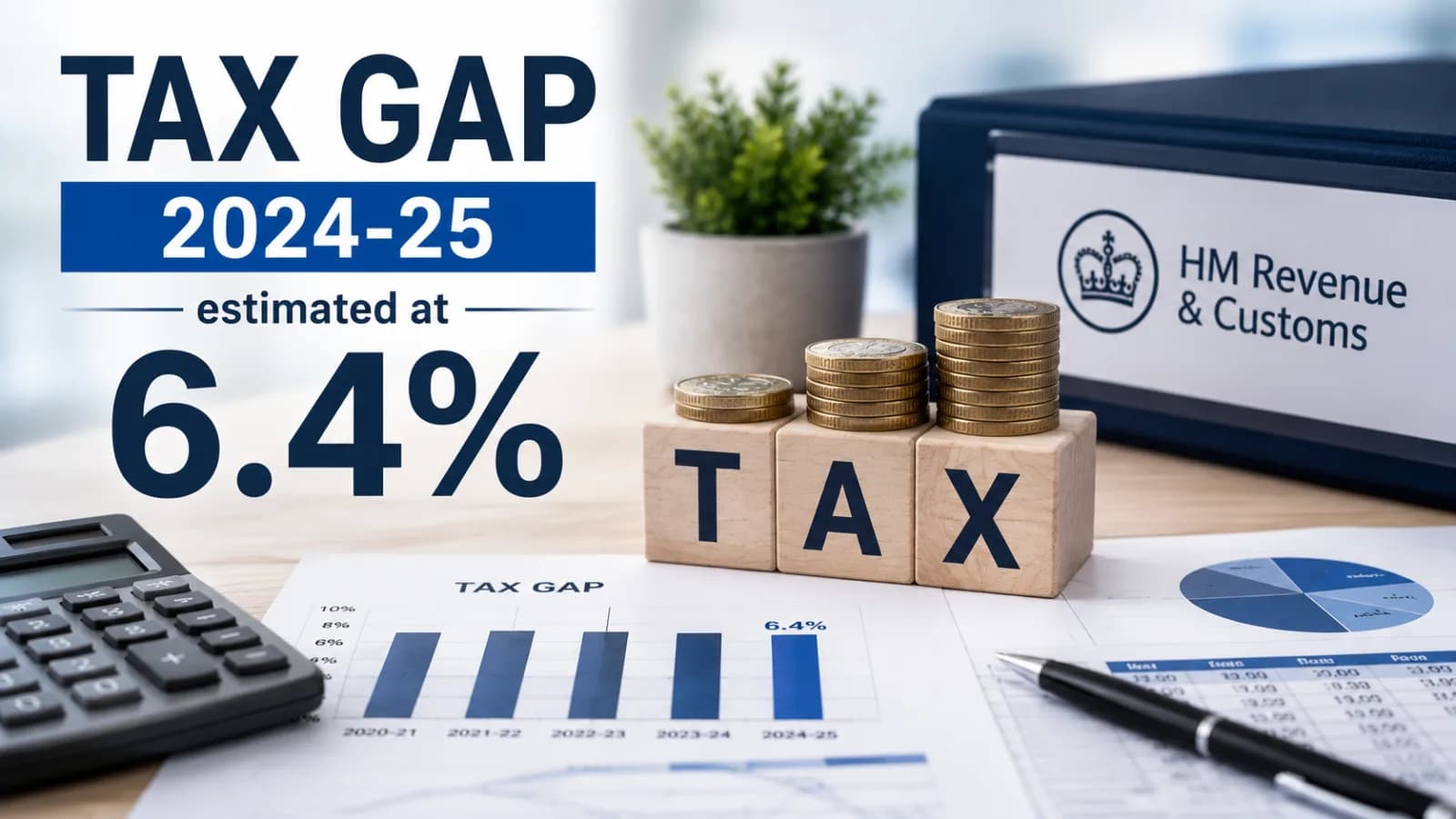
Tax Gap 2024-25 estimated at 6.4%
HMRC publishes the estimated tax gap for the 2024 to 2025 tax year.
Self Assessment: register by 5 October or face a penalty
If you need to file a Self Assessment return for the first time, you must tell HMRC by 5 October following the end of…
Side hustle tax: the £1,000 trading allowance and what HMRC already sees
You can earn £1,000 of gross trading income a year tax-free under the trading allowance. Online platforms including…
Rather someone else did it?
Partner linksFixed-fee services where a qualified accountant prepares and files your return.
TaxScouts
A real accountant files your return for one fixed fee.
Fixed fee, typically about £169 per return
Get my return doneGoSimpleTax
DIY Self Assessment software that checks for missed savings.
From about £54.99 per tax year
File it myselfWe may earn a commission if you sign up through one of these links. It never changes what we calculate, what we recommend, or the order they appear in.