
Contents
HMRC announcement, 12 June 2026.
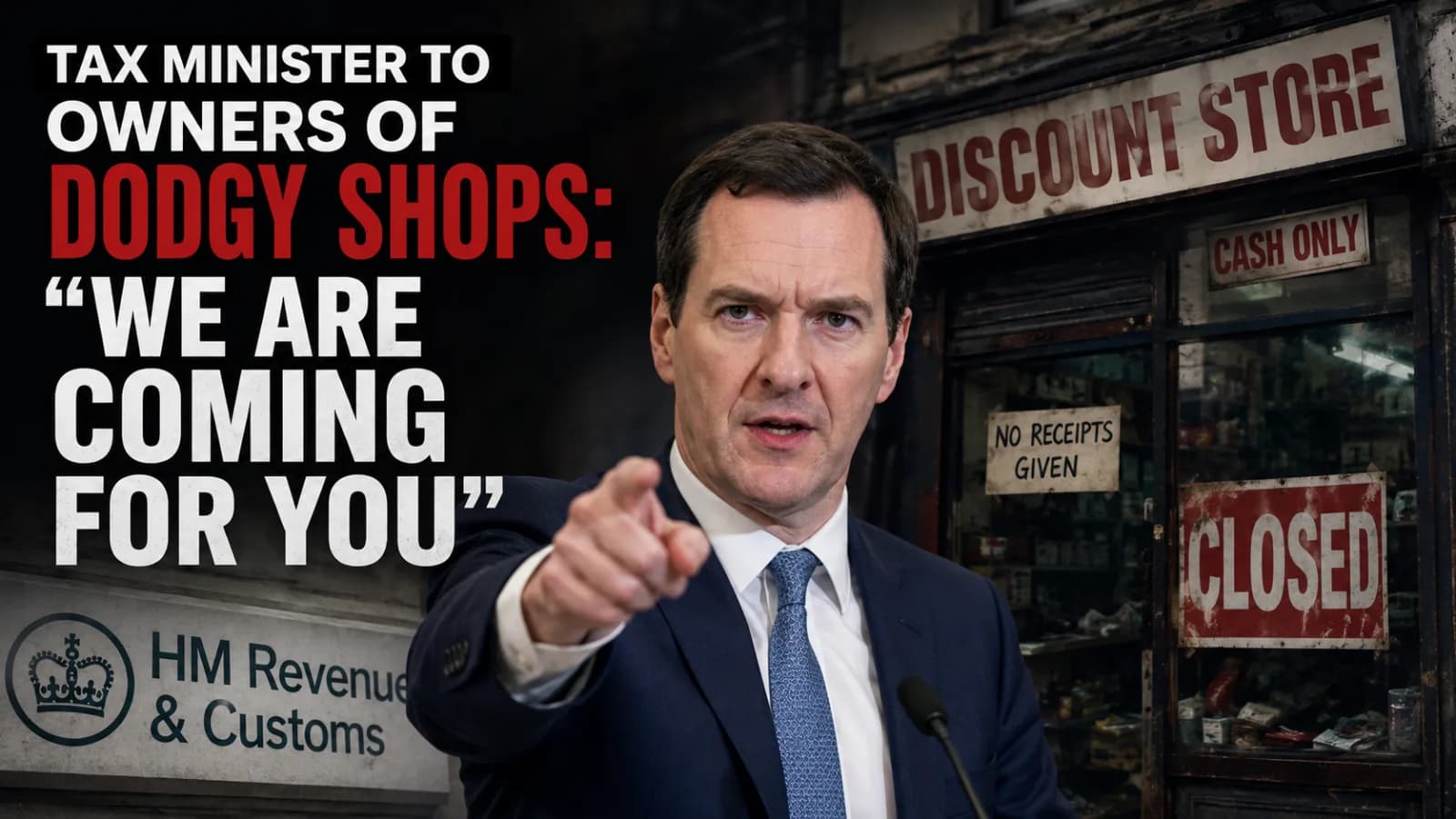
The Tax Minister has issued a blunt warning to the owners of "dodgy shops" used as fronts for tax evasion and money laundering. Exchequer Secretary Dan Tomlinson said: "HMRC is stepping up its action to go after illegal activity on our high streets. Owners of dodgy shops that are evading tax: we are coming for you."
The warning came as HMRC and partner agencies carried out a series of unannounced visits to souvenir shops in central London, part of a much larger national campaign against high-street businesses involved in tax fraud, money laundering, illicit tobacco and vapes, labour exploitation and till fraud.
What happened in London
Officers made six unannounced visits to souvenir shops in central London in a single week. HMRC downloaded till data at all six locations, a step that lets investigators compare what the till actually recorded against what the business declared. The visits produced three arrests for immigration-related offences, a £40,000 civil penalty for employing an illegal worker, and the seizure of £5,433 worth of goods, including 289 disposable vapes, 173 squishy toys, counterfeit items and unsafe electrical adapters.
The operations were run jointly by HMRC, Home Office Immigration Enforcement, Westminster Council Trading Standards, the Metropolitan Police and the National Crime Agency. That mix of agencies matters: a business that looks like a tax problem is often also an immigration, trading standards or organised crime problem, and the agencies now turn up together.
A national campaign, not a one-off
The London visits are the visible tip of a much bigger programme. HMRC plans more than 30,000 interventions across UK high streets in 2026-27, with particular attention on vape shops, barbers, souvenir shops, candy stores and convenience stores, the cash-heavy sectors most often used to disguise criminal money. A new High Street Organised Crime Unit, backed by £30 million, launched last month. Of the 350 criminal investigators recruited following last year's Budget, roughly half are focused on high-street disruption. The approach has form: Operation Machinize 2, run in November, produced 924 arrests and £13 million seized.
Why it matters for honest traders
Some cash-intensive businesses are used to disguise criminal income by under-declaring takings, paying staff cash-in-hand, or laundering money from other crimes. Every pound of undeclared takings is a pound of unfair price advantage over the legitimate shop next door, which pays its VAT, its payroll taxes and its business rates in full. The crackdown is as much about protecting honest traders from being undercut as it is about collecting revenue, and many legitimate shop owners will welcome visits to competitors they have long suspected of not playing fair.
What it means for legitimate businesses
If you run a small or cash-based business in one of the targeted sectors, the odds of receiving a visit or a records check are going up, even if you have done nothing wrong. The best protection is boringly simple: keep clean, complete records, reconcile your till takings to your bankings, declare all income including cash, and make sure your staff are paid through payroll with right-to-work checks done. Till data downloads mean gaps between recorded sales and declared turnover are easy for HMRC to spot.
It is also a good moment to sanity-check your numbers. Our VAT calculator helps you confirm the VAT element of your takings, and our self-employed tax calculator shows what you should expect to owe on your profits. Digital record keeping will soon be mandatory for many businesses under Making Tax Digital, and moving to it early makes compliance visits far less stressful. Our record-keeping guide covers what you need to keep and for how long.
What to do if you have something to correct
If you know your past returns understated your takings, coming forward voluntarily is always cheaper than waiting to be found. HMRC offers disclosure routes that significantly reduce penalties compared with what follows an investigation, and with 30,000 interventions planned, waiting is a poor strategy. Speak to a qualified adviser before HMRC speaks to you.
Source: GOV.UK - official announcement
Figures and policies can change. Always confirm the latest position on GOV.UK.
Read next
More Tax Guides →
Kids Meals Tax Cut 2026: VAT Slashed to 5% on Children's Meals and Days Out
The Great British Summer Savings scheme went live on 25 June 2026, cutting VAT from 20% to 5% on children's restaurant…

The VAT Registration Threshold: When You Must Register, and When You Can Come Off
The VAT threshold is £90,000 measured over any rolling 12 months, not your tax year. Miss the 30-day deadline and you…

How Much Tax Will I Pay on a £50,000 Salary? (2026/27)
On a £50,000 salary in England, Wales or NI for 2026/27 you take home about £39,520 a year (£3,293 a month) after tax…
Rather someone else did it?
Partner linksFixed-fee services where a qualified accountant prepares and files your return.
TaxScouts
A real accountant files your return for one fixed fee.
Fixed fee, typically about £169 per return
Get my return doneGoSimpleTax
DIY Self Assessment software that checks for missed savings.
From about £54.99 per tax year
File it myselfWe may earn a commission if you sign up through one of these links. It never changes what we calculate, what we recommend, or the order they appear in.