
Contents
- What changed, and when
- Background: why a VAT cut, and why now
- What exactly is covered
- Calculator: VAT Calculator
- How the maths works: what the VAT cut actually saves you
- Which businesses are taking part
- What it means for you: who benefits and by how much
- Free bus travel for children in England: August 2026 (now ended)
- What to watch out for
- The broader cost-of-living context
What changed, and when
From 25 June 2026, VAT on a defined range of children's meals and family leisure activities was cut from 20% to 5% across England, Wales, Scotland, and Northern Ireland. The scheme, branded Great British Summer Savings, was announced by Chancellor Rachel Reeves and took effect immediately. This is not a discount voucher scheme or a targeted benefit - it is a statutory VAT reduction, meaning businesses that are VAT-registered are required to account for VAT at 5% rather than 20% on the eligible supplies, and the government expects them to pass that saving on to customers.
The cut covers three distinct categories: children's menu meals eaten on restaurant premises; children's and family tickets for cinemas, theatres, concerts, shows, and exhibitions; and admission tickets (for both adults and children) to a broad range of attractions including amusement parks, zoos, soft play centres, museums, nature reserves, wildlife parks, adventure parks, fairs, circuses, and observation attractions.
Background: why a VAT cut, and why now
VAT is normally charged at 20% on most goods and services in the UK. The standard rate has sat at that level since 2011. Hospitality and leisure businesses are fully within the standard-rate regime - unlike, say, food bought in a supermarket, which is zero-rated. That means every time a family orders from a children's menu in a restaurant, or buys cinema tickets, 20% of the price they pay goes to HMRC as VAT.
The government has form with temporary VAT cuts for hospitality. During the Covid pandemic, a reduced 5% rate was introduced for hospitality and tourism from July 2020, before rising to 12.5% in October 2021 and reverting to 20% in April 2022. The Great British Summer Savings scheme is narrower in scope - it targets family and children's spending specifically, rather than the whole hospitality sector - but the mechanism is identical: a statutory reduction in the VAT rate applied to eligible supplies.
The stated rationale is cost-of-living pressure on household budgets, particularly over the summer school holidays when children are at home and families feel pressure to keep them entertained. The government cited the cost of living as the primary driver, alongside a desire to boost footfall for leisure and hospitality businesses during a commercially important period.
What exactly is covered
The three qualifying categories, as set out in the government announcement, are:
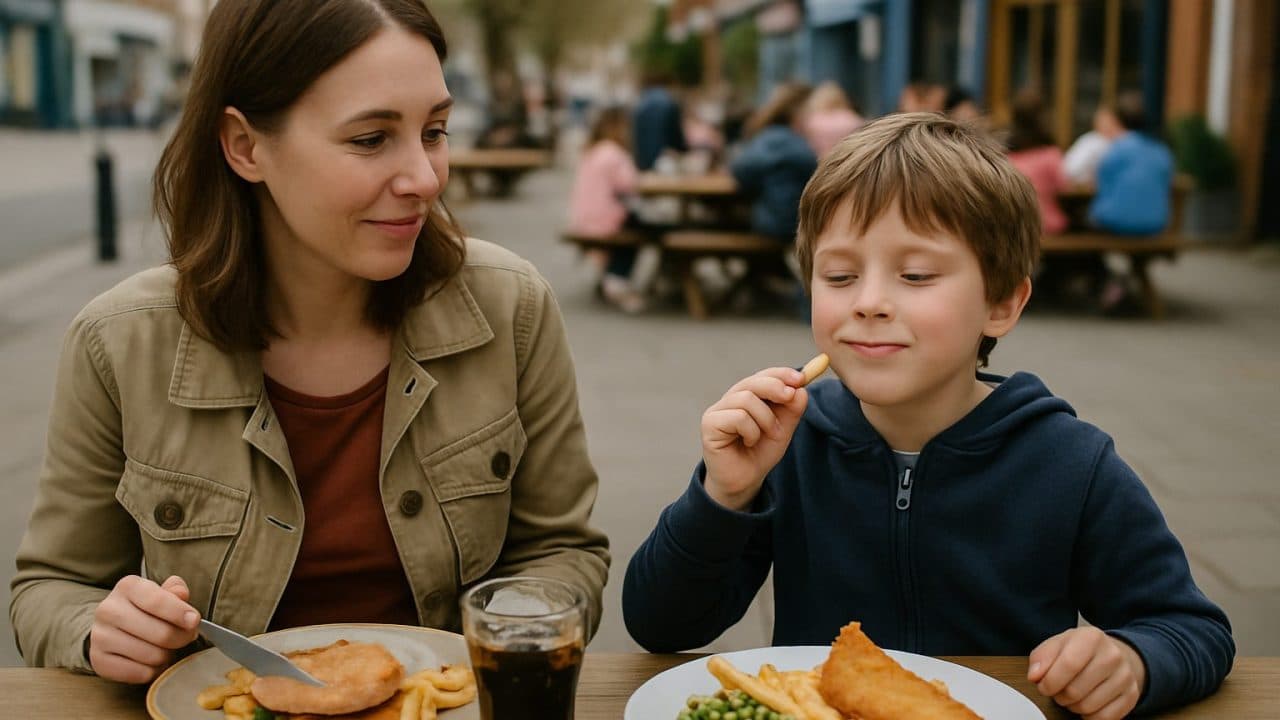
- Children's menu meals served in restaurants, cafés, pubs, and similar venues, for consumption on the premises. This is meals ordered from a children's menu - not adult meals, not takeaway orders, and not food bought to eat outside the premises.
- Children's and family tickets for cinemas, theatres, concerts, shows, and exhibitions. Note that standard adult-only tickets are not in scope unless they form part of a family ticket product.
- Admission tickets to a wide range of leisure attractions - amusement parks, zoos, soft play centres, museums, nature reserves, wildlife parks, adventure parks, fairs, circuses, and observation attractions. Critically, for this category, both adult and children's tickets qualify, not just children's tickets.
The distinctions matter. If you buy an adult meal from a restaurant's main menu, VAT remains at 20%. If you buy a coffee to accompany your child's meal, VAT on the coffee is 20%. The reduced rate applies specifically to the eligible supply - businesses will need to split their bills accordingly.
Work it out for your own figures
Open the full VAT Calculator →Amount
VAT is calculated instantly as you type. Standard and reduced rates come from current UK VAT settings.
Quick amounts
at VAT
- Net (excluding VAT)
- VAT ()
- Gross (including VAT)
VAT makes up of the gross price. Divide gross by to get the net figure.
Estimate only. Check current VAT rules at gov.uk for your goods or services.
What your VAT Calculator result means
The VAT Calculator does more than show a number. Below your result it explains what your figures mean in practice - your effective and marginal rates, any allowances or thresholds you are close to, and the specific steps to take next. Enter your details above and the guidance updates to match your situation.
Do this next, in order
Estimates only - not financial or tax advice. Confirm figures on GOV.UK or with an adviser.
Enter your sales and purchases for a VAT period to estimate what you owe HMRC (or reclaim). Enter figures excluding VAT.
VAT on sales (output VAT):
VAT on purchases (input VAT):
- Output VAT (charged on sales)
- Input VAT (reclaimed on purchases)
- −
Standard accounting. Uses the selected VAT rate (). The Flat Rate Scheme below can give a different figure.
On the Flat Rate Scheme you pay a fixed percentage of your VAT-inclusive (gross) turnover and generally cannot reclaim input VAT. Enter your trade's flat rate percentage to compare.
Find your sector's rate on gov.uk (e.g. 12% for many trades; 16.5% limited-cost).
Standard scheme
Output VAT − input VAT
Flat Rate Scheme
% of gross sales
Flat Rate Scheme could save you this period. Standard scheme is cheaper by this period.
Comparison only - eligibility, the limited-cost trader rules and reclaiming VAT on capital assets over £2,000 can change the outcome.
Net vs VAT across amounts
How the net amount and gross (VAT-inclusive) price grow at VAT.
Compare saved scenarios
| Scenario | Net | VAT | Gross | |
|---|---|---|---|---|
How the maths works: what the VAT cut actually saves you
Understanding the saving requires a brief explanation of how VAT works in practice. When a business charges you £10 for a meal, and VAT is 20%, the VAT-inclusive price is £10 × 1.20 = £12. The VAT element is £2. If VAT falls to 5%, the same underlying net price of £10 becomes £10 × 1.05 = £10.50. The VAT element drops to 50p. You save £1.50 on that £10 net meal.
As a rule of thumb, the saving to the consumer - if the business passes it on in full - is approximately 12.5% off the previous VAT-inclusive price. That is because the old gross price included 20% VAT (so the net was 100/120 = 83.3% of the gross), and the new gross price includes only 5% VAT (net is 100/105 = 95.2% of the new gross). The ratio of new gross to old gross, at the same net price, is 1.05/1.20 = 0.875 - a saving of 12.5%.
Worked example 1: family cinema trip
A family of two adults and two children buys a family ticket to a Vue cinema. Before the scheme, the family ticket costs £40 (VAT-inclusive at 20%). The net price is £40 / 1.20 = £33.33, with £6.67 VAT. Under the 5% rate, the same net price of £33.33 attracts VAT of £1.67, giving a new ticket price of £35. The family saves £5 on that one outing. If the cinema adds a children's meal deal, and the children's meals qualify separately, the saving compounds further.
Worked example 2: lunch from a children's menu
Two children each order from a children's menu at a Wetherspoons pub. Each meal is priced at £5 (VAT-inclusive). Previously: net price per meal = £5 / 1.20 = £4.17, VAT = 83p. Under the 5% rate: net = £4.17, VAT = 21p, new price = £4.38. Each child's meal drops by 62p, saving £1.24 for both meals combined. Across a full summer of weekend lunches - say, ten outings - that adds up to over £12 on children's meals alone.
Worked example 3: a day at an amusement park
A family of four visits an amusement park. Admission for two adults and two children, previously priced at £80 (VAT-inclusive at 20%), would be recalculated as follows. Net price: £80 / 1.20 = £66.67. New gross at 5%: £66.67 × 1.05 = £70. Saving: £10 on admission alone. If the family also buys children's meals on site at £8 per child (VAT-inclusive), the saving on those two meals is approximately £1.25. Total saving on the day: around £11.25.
Which businesses are taking part
The VAT reduction is a legal change - VAT-registered businesses must account for VAT at 5% on eligible supplies during the scheme period. What is discretionary is whether they pass the saving on to customers in full, partially, or not at all (by keeping prices the same and pocketing the difference as margin). The government has been clear it expects businesses to pass savings on, and a number of major brands have publicly committed to doing so.
Businesses confirmed as passing on the saving include Picturehouse, Everyman Cinemas, Vue, Butlin's, Haven Holidays, Wetherspoons, Shepherd Neame pubs, McDonald's, KFC, Burger King, and a range of independent cafés and soft play areas. Haven has stated it expects to return up to £5 million to families across its 39 holiday parks during the scheme, and holidaymakers who have already booked will benefit automatically. Butlin's has confirmed savings will apply to Day Visits and children's meals across its dining venues.
Industry bodies including the British Chambers of Commerce, the Federation of Small Businesses, UKHospitality, and the Society of London Theatre and UK Theatre have backed the scheme. Many theatres across the UK are participating, and the Society of London Theatre's existing Kids Week campaign - which offers free tickets for children aged 17 and under - runs alongside the VAT reduction.
If you are visiting a business that has not publicly confirmed participation, it is worth checking the bill. The VAT rate applied to eligible supplies should be 5%, not 20%. If you are charged 20% VAT on a children's meal or qualifying admission ticket, the business may not be passing on the reduction.
What it means for you: who benefits and by how much
Every family with children stands to benefit, and unlike some targeted measures, there is no means-testing, no application process, and no eligibility threshold. The saving arrives automatically at the point of purchase - assuming the business passes it on.
The households who benefit most are those who spend the most on the qualifying categories. Families who regularly eat out with children, visit attractions, or buy cinema and theatre tickets accumulated the largest savings over the summer. Families on tighter budgets who might otherwise have avoided these activities may find the reduced prices bring them back into reach.
For a family that makes ten leisure outings over the summer, spending an average of £60 (VAT-inclusive) per outing on eligible items, the total saving at 12.5% would be around £75. That is a meaningful sum - roughly equivalent to a family's weekly grocery shop - without any action required beyond choosing participating venues.
The scheme is UK-wide - it applies in Scotland, Wales, and Northern Ireland as well as England. VAT is a reserved matter (set by Westminster), so there is no regional variation in the rate itself, though the mix of participating businesses will naturally vary by location.
Free bus travel for children in England: August 2026 (now ended)
This scheme has finished. Alongside the VAT cut, the government ran free bus travel for children in England for the whole of August 2026. It applied to all children in England and was designed to support families where driving was not an option, and for that month children’s bus journeys cost nothing.
From 1 September 2026 normal child fares apply again, so if you are planning a day out now, budget for the bus. The VAT reduction on children’s meals and days out is a separate measure and was not tied to the August travel window — check the current position with the venue before you travel.
This measure applies only in England. Scotland, Wales, and Northern Ireland have their own concessionary travel arrangements, and the August free travel scheme does not extend to those nations.
What to watch out for
A few practical points are worth bearing in mind as a consumer.
Not all food in a restaurant is covered. The 5% rate applies to children's menu meals eaten on the premises. Adult meals, drinks (including soft drinks), and takeaway orders are not covered. A café that charges a flat price for a meal deal including an adult coffee and a child's meal will need to split the bill correctly for the reduced rate to apply to the child's portion only. If you see a single line on your receipt charged at 20% covering both adult and children's items, ask for clarification.
Family tickets must genuinely be family tickets. Two adult cinema tickets bought together are not a family ticket. The reduced rate applies to products marketed and sold as children's or family tickets. Standard adult admissions remain at 20%.
The scheme is temporary. The government announcement describes this as a summer scheme. The source does not state a specific end date beyond the summer period. Check with venues whether the reduced rate is still in force before visiting later in the year.
Museums that are already free. Many of the UK's most popular museums - the Natural History Museum, the Science Museum, the British Museum - are free to enter. The VAT cut on admission tickets does not create any saving at institutions with £0 admission, though any paid activities or exhibitions within those venues may still qualify.
Businesses that do not pass on the saving. Legally, the VAT liability falls to 5% on eligible supplies. But if a business decides to keep prices unchanged, it pays less VAT to HMRC and retains the difference as profit. There is no legal obligation to reduce consumer prices, only a political and reputational expectation. Check whether prices at your chosen venue have actually dropped before assuming the saving has been passed on.
The broader cost-of-living context
The Great British Summer Savings VAT cut sits within a wider package of cost-of-living measures the government has described, including the freezing of fuel duty, a £117 reduction off household energy bills, frozen rail fares and prescription charges, free school breakfasts, and increases to the National Minimum Wage and National Living Wage. For families with children, the summer holidays represent a particularly acute pressure point - childcare costs rise, holiday clubs and activities need to be paid for, and the rhythm of school meals disappears.
The VAT cut is specifically designed to address the leisure and dining portion of that pressure. It does not affect childcare costs, food shopping, or utility bills - those remain subject to their existing VAT treatment (childcare is exempt; most food is zero-rated; energy is at the reduced 5% rate).
For a fuller picture of your household tax position - including income tax, National Insurance, and any savings or investment tax - tools like the TaxFly Tax Calculator and the Salary Calculator can help you understand what you are paying and where there might be room to optimise.
If you have questions about VAT specifically - for example, if you run a small business and need to understand how the reduced rate interacts with your VAT returns - the VAT Calculator and VAT Return Calculator are useful starting points.
This article is for general information only and does not constitute personal tax or financial advice. VAT rules can be complex and the details of this scheme may evolve - check the official GOV.UK announcement for the most up-to-date guidance.
Frequently asked questions
What is the kids meals tax cut 2026 and when did it start?
How much will I actually save on a family day out?
Does the VAT cut apply to adult meals and tickets too?
Which major businesses are participating in Great British Summer Savings?
Does the VAT cut apply in Scotland, Wales, and Northern Ireland?
Do businesses have to pass on the VAT saving to customers?
Is the free children's bus travel in August 2026 part of the same scheme?
Read next
More News →
The VAT Registration Threshold: When You Must Register, and When You Can Come Off
The VAT threshold is £90,000 measured over any rolling 12 months, not your tax year. Miss the 30-day deadline and you…
Tax on Savings Interest 2026/27: The Personal Savings Allowance
With savings rates the highest in years, more people are breaching their Personal Savings Allowance - £1,000 for…
Stamp Duty 2026: What You Pay and First-Time Buyer Relief
In England and Northern Ireland, Stamp Duty Land Tax now starts at £125,000, with first-time buyers paying nothing up to…
Rather someone else did it?
Partner linksFixed-fee services where a qualified accountant prepares and files your return.
TaxScouts
A real accountant files your return for one fixed fee.
Fixed fee, typically about £169 per return
Get my return doneGoSimpleTax
DIY Self Assessment software that checks for missed savings.
From about £54.99 per tax year
File it myselfWe may earn a commission if you sign up through one of these links. It never changes what we calculate, what we recommend, or the order they appear in.