

Contents
- Quick summary
- What Marriage Allowance is
- Who can claim
- Calculator: Marriage Allowance Calculator
- Real-life examples
- How to claim
- Common mistakes to avoid
- Why a million couples miss out
- More real-life examples
- How to claim, step by step
- Marriage Allowance versus Married Couple's Allowance
- A worked example with backdating
- When to review or cancel
- Key takeaways
- The bottom line
It is one of the simplest tax breaks in the UK, it is free to claim, and an estimated million-plus eligible couples still miss it. Marriage Allowance can cut a couple's tax by up to £252 a year and pay out more than £1,000 as a backdated lump sum. This guide explains who qualifies, shows the savings with examples, and walks through claiming it directly from HMRC at no cost.
Quick summary
- What it does: transfers £1,260 of personal allowance between partners
- Annual saving: up to £252
- Backdating: up to 4 tax years - over £1,000 possible
- Who qualifies: married/civil partners, one below £12,570, the other a basic-rate taxpayer
- Cost to claim: nothing - apply free via HMRC
Marriage Allowance 2026 - the key figures
| Item | Detail |
|---|---|
| Allowance transferred | £1,260 (10% of the Personal Allowance) |
| Tax saving | Up to £252 a year (20% of £1,260) |
| Lower earner | Income below £12,570 (a non-taxpayer) |
| Higher earner | Basic-rate taxpayer (£12,571 – £50,270) |
| Backdating | Up to 4 years - can exceed £1,000 as a lump sum |
What Marriage Allowance is
Marriage Allowance lets a lower-earning spouse or civil partner transfer £1,260 of their unused personal allowance to their partner. That reduces the higher earner's tax by up to £252 a year (20% of £1,260). It exists to help couples where one person doesn't use all of their tax-free allowance.
Who can claim
- You are married or in a civil partnership (living together as a couple without marrying does not count).
- One partner earns below the £12,570 personal allowance, so has spare allowance to give.
- The other partner is a basic-rate taxpayer, with income roughly £12,571–£50,270.
Work it out for your own figures
Open the full Marriage Allowance Calculator →You & your partner
Enter each partner's annual income. Results update as you type.
HMRC lets you backdate Marriage Allowance up to 4 previous tax years if you were eligible.
Marriage Allowance lets a non-taxpayer transfer £ of their Personal Allowance to a basic-rate-paying spouse or civil partner.
- Allowance transferred
- Saving rate
- Saving this year
- Backdated (y)
- Total this claim
Estimate only. The transferring partner gives up part of their own Personal Allowance.
Cumulative saving
If you keep claiming each year (the same saving repeats annually once the claim is active).
What your Marriage Allowance Calculator result means
The Marriage Allowance Calculator does more than show a number. Below your result it explains what your figures mean in practice - your effective and marginal rates, any allowances or thresholds you are close to, and the specific steps to take next. Enter your details above and the guidance updates to match your situation.
Do this next, in order
Estimates only - not financial or tax advice. Confirm figures on GOV.UK or with an adviser.
Compare saved scenarios
| Scenario | Per year | Backdate | Total | |
|---|---|---|---|---|
Real-life examples
Example 1 - one partner works part-time. Emma earns £8,000 part-time and her husband Liam earns £35,000. Emma transfers £1,260 of her unused allowance to Liam, cutting his tax by £252 this year. If they were eligible for the past four years too, the backdated claim adds roughly £1,000 as a one-off. Confirm the saving with the Marriage Allowance calculator.
Example 2 - a retired couple. Brian has only the state pension (under £12,570) and his wife has a private pension of £20,000. Transferring the allowance saves them £252 a year - useful when every pound counts in retirement. Check their incomes with the income tax calculator.
Example 3 - when it does NOT help. If the higher earner is a 40% taxpayer (over £50,270), the couple is not eligible, and if the lower earner already uses all their allowance there is nothing to transfer. Always check first.
How to claim
- Check eligibility and the amount with the Marriage Allowance calculator.
- The lower earner applies (the one giving up part of their allowance) through HMRC.
- Apply free directly on GOV.UK - never pay a third-party site to do it.
- Once set up it usually renews automatically, so you don't have to claim again each year.
Common mistakes to avoid
Don't pay a "claims company" a cut of your refund - HMRC's own service is free and takes minutes. Don't forget to backdate; the extra years are where most of the money is. And tell HMRC if your circumstances change (for example the lower earner's income rises above the allowance), so the transfer stays correct.
Why a million couples miss out
Marriage Allowance is one of the most under-claimed tax breaks in the country, with estimates suggesting more than a million eligible couples have never claimed. The reason is that there is no automatic enrolment - HMRC does not apply it for you. You have to know it exists and apply. The couples most likely to qualify are exactly the ones least likely to be thinking about tax planning: households where one partner works part-time, has taken a career break, is a stay-at-home parent, or is retired with a small income. If that sounds like your household, it is well worth two minutes to check.
It is also one of the few allowances you can claim retrospectively. Because you can backdate four tax years, a first-time claim often arrives as a lump sum worth four times the annual saving plus the current year - frequently more than £1,000. After that, the saving continues automatically each year, so a few minutes of effort can be worth a four-figure sum over time.
More real-life examples
Example 4 - a new parent on maternity leave. During a year of reduced pay on parental leave, one partner's income can dip below the £12,570 allowance. If the other partner is a basic-rate taxpayer, they become eligible for Marriage Allowance for that year - a detail many new parents miss while juggling a newborn.
Example 5 - the backdating windfall. Raj and Sunita realise they have been eligible for the past four years but never claimed. They claim for all four prior years plus the current one, receiving a backdated payment of roughly £1,000 as a lump sum, then continue to save up to £252 every year going forward.
Example 6 - when income changes. If the lower earner's income later rises above £12,570, or the higher earner moves into the 40% band, the couple may no longer benefit. It is important to tell HMRC when circumstances change so the transfer stays correct and you don't end up with an unexpected adjustment.
How to claim, step by step
The process is quick and free. The lower-earning partner makes the claim, because they are the one giving up part of their unused allowance. You apply directly through HMRC's own service - you will need both partners' National Insurance numbers and a way to verify identity. Once approved, HMRC adjusts the higher earner's tax code so the saving comes through automatically, and the arrangement usually renews each year without you having to reapply. Crucially, never pay a third-party "claims" company a percentage of your refund - they do nothing you cannot do yourself for free. Check your eligibility and the likely saving first with the Marriage Allowance calculator.
Marriage Allowance versus Married Couple's Allowance
It is easy to confuse two different reliefs. Marriage Allowance, covered here, is the one most couples can use: it transfers £1,260 of personal allowance and is worth up to £252 a year. The separate Married Couple's Allowance is far more generous but only available where at least one spouse or civil partner was born before 6 April 1935 - so it applies to a small, older group. If you were born after that date, Marriage Allowance is the relief to focus on. Mixing the two up is a common reason people wrongly assume they don't qualify for anything.
It is also worth knowing how Marriage Allowance interacts with tax codes. When you claim, the lower earner's code usually changes to an "N" suffix (showing they have transferred allowance) and the higher earner's to an "M" suffix (showing they have received it). Seeing these letters on your payslip is simply confirmation the transfer is in place - not a sign anything is wrong.
A worked example with backdating
Take Emma and Liam again, and put real numbers on the backdating. Suppose they have been eligible for the current year and the previous four years but never claimed. For each year the saving is up to £252, depending on the exact allowance for that year. Claiming all five years together can produce a lump sum in the region of £1,000 or more, paid out after HMRC processes the backdated claim, with the current year's saving then delivered through Liam's adjusted tax code. From then on, the relief renews automatically each year. Confirm your own figures with the Marriage Allowance calculator and check both incomes with the income tax calculator.
When to review or cancel
Marriage Allowance is not always permanent. If the lower earner's income rises above the £12,570 personal allowance, or the higher earner moves into the 40% band, the couple may no longer benefit, and continuing the transfer could even create a small bill. Tell HMRC promptly when your circumstances change so the relief is adjusted. Likewise, if you separate or divorce, you should cancel the transfer. A quick annual check - does one of us still earn under the allowance, and is the other still a basic-rate taxpayer? - keeps everything correct.
Key takeaways
- Marriage Allowance transfers £1,260 of personal allowance, worth up to £252 a year.
- You can backdate four tax years, often producing a one-off payout of more than £1,000.
- Eligible couples: married or in a civil partnership, one earning under £12,570, the other a basic-rate taxpayer.
- The lower earner applies, free, directly through HMRC - never pay a third-party claims company.
- Once set up it usually renews automatically each year.
- Tell HMRC if your income changes, as you may no longer qualify.
The bottom line
If you're married or in a civil partnership and one of you earns under £12,570, Marriage Allowance is almost certainly worth claiming - and backdating. It is one of the highest-value, lowest-effort tax moves available, and because it can be backdated, even couples who have been eligible for years can still recover what they missed. Spend a couple of minutes checking - for many households it is the easiest few hundred pounds a year they will ever save, and once it is set up there is nothing more to do. Apply on the official GOV.UK Marriage Allowance page.
General information only, not personal advice.
Frequently asked questions
How much is Marriage Allowance worth?
Who is eligible for Marriage Allowance?
Can I backdate a Marriage Allowance claim?
Does it cost anything to claim Marriage Allowance?
Who should apply — the higher or lower earner?
Do I need to reapply every year?
Read next
More News →
Tax on Savings Interest 2026/27: The Personal Savings Allowance
With savings rates the highest in years, more people are breaching their Personal Savings Allowance - £1,000 for…
Stamp Duty 2026: What You Pay and First-Time Buyer Relief
In England and Northern Ireland, Stamp Duty Land Tax now starts at £125,000, with first-time buyers paying nothing up to…
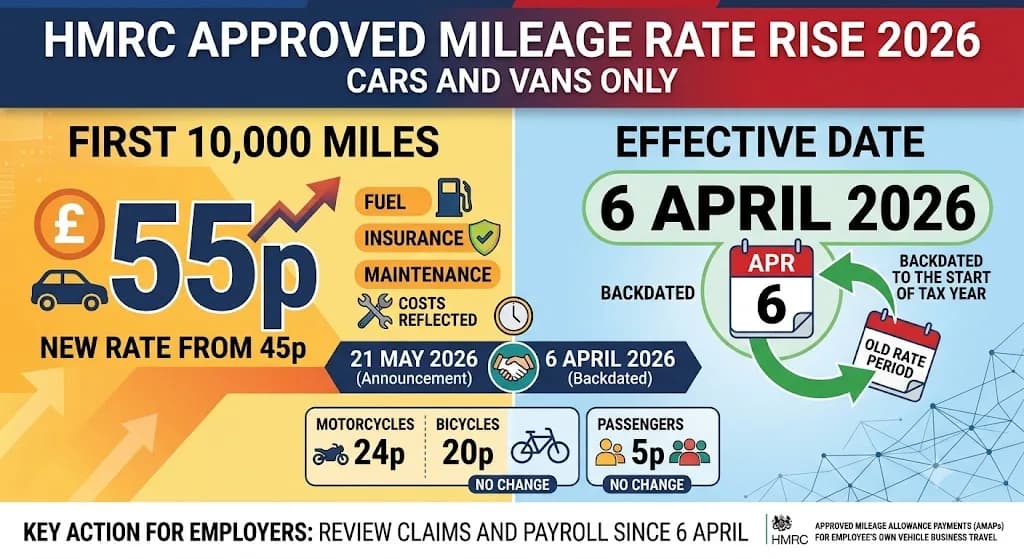
HMRC Mileage Rate Rises to 55p a Mile, Backdated to 6 April 2026
The approved mileage rate for cars and vans rises from 45p to 55p per mile for the first 10,000 business miles, the…
Rather someone else did it?
Partner linksFixed-fee services where a qualified accountant prepares and files your return.
TaxScouts
A real accountant files your return for one fixed fee.
Fixed fee, typically about £169 per return
Get my return doneGoSimpleTax
DIY Self Assessment software that checks for missed savings.
From about £54.99 per tax year
File it myselfWe may earn a commission if you sign up through one of these links. It never changes what we calculate, what we recommend, or the order they appear in.