

Contents
Money you take from a pension is taxed as income, at the same rates as a salary, but with no National Insurance deducted at any age. Usually 25% of your pot can be taken tax-free and the rest is added to your other income for the year, so in England, Wales and Northern Ireland you pay 0% on income covered by the £12,570 Personal Allowance, then 20%, 40% and 45%. The reason so many people see a shock deduction is that first flexible withdrawals are often taxed on an emergency "month 1" code, which assumes you will take the same amount every month for a year.
Key points
- Pension income is non-savings income: Scottish taxpayers pay Scottish rates on it, with 42% starting at £43,662 rather than £50,270.
- Normally 25% of a defined contribution pot is tax-free; the other 75% is taxable when you draw it.
- No National Insurance is due on pension income, even if you are under State Pension age.
- An emergency code on a first withdrawal can take thousands too much — it is refundable, either by claim or automatically after the tax year ends.
- Splitting one large withdrawal across several tax years is the single biggest lever most people have over the bill.
How pension income is taxed
Three things are taxable and get added together: the State Pension, any defined benefit (final salary) pension, and the taxable part of any money you draw from a defined contribution pot. Tax-free cash is not income at all — it does not use up your Personal Allowance, does not push you into a higher band, and does not count towards the £100,000 point at which the Personal Allowance starts to taper away.
The rates on total income in 2026/27
| Total income | England, Wales & NI | Scotland |
|---|---|---|
| Up to £12,570 | 0% | 0% |
| £12,571 – £16,537 | 20% | 19% (starter) |
| £16,538 – £29,526 | 20% | 20% (basic) |
| £29,527 – £43,662 | 20% | 21% (intermediate) |
| £43,663 – £50,270 | 20% | 42% (higher) |
| £50,271 – £75,000 | 40% | 42% (higher) |
| £75,001 – £125,140 | 40% | 45% (advanced) |
| Over £125,140 | 45% | 48% (top) |
The table assumes a full £12,570 Personal Allowance. Above £100,000 of adjusted net income the allowance drops by £1 for every £2 of income and disappears at £125,140, which creates an effective 60% rate on that slice — a real risk if you take a big taxable lump sum while still working.
The 25% tax-free element
You can normally take a quarter of a defined contribution pot free of tax, either as one lump sum before moving the rest into drawdown, or in slices where each withdrawal is 25% tax-free and 75% taxable (an uncrystallised funds pension lump sum, or UFPLS). There is an overall cap on tax-free lump sums of £268,275 for most people. Our guide to pension drawdown sets out how the two routes differ in practice.
One trap for people still paying in: taking taxable income flexibly triggers the money purchase annual allowance, cutting how much you can contribute with tax relief from £60,000 to £10,000 a year. Taking tax-free cash alone and moving the balance into drawdown without drawing taxable income does not trigger it.
Why the first withdrawal is over-taxed
Pension providers deduct tax through PAYE. When you make a first flexible withdrawal, the provider often has no tax code for you, so HMRC's emergency month 1 code is applied. That code gives you one twelfth of the Personal Allowance and one twelfth of each rate band, as though the payment were the first of twelve identical monthly payments. A one-off withdrawal therefore gets taxed as if your annual income were twelve times bigger than it really is.
Worked example: a £20,000 first withdrawal
Rosa, 58, takes £20,000 as a UFPLS from her pot and has no other income this tax year. £5,000 is tax-free and £15,000 is taxable. Under the month 1 code:
- £1,047.50 (one twelfth of £12,570) is tax-free
- next £3,141.67 at 20% = £628.33
- next £7,286.66 at 40% = £2,914.66
- remaining £3,524.17 at 45% = £1,585.88
Tax deducted: £5,128.87, so £14,871.13 lands in her bank account. Her actual liability for the year is £15,000 minus the £12,570 allowance = £2,430 at 20% = £486. She is owed £4,642.87 back.
Getting the money back
You do not have to wait for the refund, although HMRC will reconcile your position automatically after 5 April if you do nothing. Mid-year, the form depends on what you did:
- Form P55 — you took part of your pot and are not taking regular payments.
- Form P50Z — you emptied the pot and have no other taxable income.
- Form P53Z — you emptied the pot and do have other taxable income.
If you take a second withdrawal later in the same year, the provider will usually have a proper cumulative code by then and the over-payment often washes out through PAYE. HMRC has been improving how codes are issued on first flexible payments, so some people now see a more accurate deduction straight away.
A practical workaround many people use is a small first withdrawal — a few hundred pounds — purely to get a real tax code on the record, then the larger withdrawal afterwards. You can model the deduction before you press the button with the pension lump sum tax calculator.
Work it out for your own figures
Open the full Pension Drawdown Calculator →Your drawdown plan
See how long your pension pot could last in drawdown, and how the balance runs down year by year.
Grows your withdrawal each year to keep its spending power. Set to 0 for a flat withdrawal.
Your pot could last
drawing /yr from a pot - pot empties around age
growth of covers your /yr withdrawal
- Starting pot
- Withdrawal rate
- Total withdrawn
- Growth earned
- Lasts until
Estimate only. Returns are not guaranteed and can be negative. Tax on withdrawals is not included.
Pot balance over time
Projected balance at the end of each year, after that year's withdrawals and growth.
| Year | Age | Withdrawn | Growth | Pot at year end |
|---|---|---|---|---|
Showing the first 40 years - at this withdrawal rate the pot is not projected to run out.
What your Pension Drawdown Calculator result means
The Pension Drawdown Calculator does more than show a number. Below your result it explains what your figures mean in practice - your effective and marginal rates, any allowances or thresholds you are close to, and the specific steps to take next. Enter your details above and the guidance updates to match your situation.
Do this next, in order
Estimates only - not financial or tax advice. Confirm figures on GOV.UK or with an adviser.
Compare saved scenarios
| Scenario | Pot | Withdrawal | Growth | Lasts | |
|---|---|---|---|---|---|
Taking it in stages: the 40% question
"Why am I paying 40% tax on my pension?" almost always has one of two answers: an emergency code, or a genuinely large taxable withdrawal stacked on top of other income in a single tax year. The second one is permanent unless you plan around it.
The higher rate bites at £50,270 of total income in England, Wales and Northern Ireland, and 42% bites at £43,662 in Scotland. Every pound of taxable pension income below those points costs 20% or less. So the question is not only how much you need, but how many tax years you spread it over.
Worked example: £100,000 in one year versus four
Dev, 60, has stopped work and no other income. He wants £100,000 from his pot.
All in one tax year: £25,000 tax-free, £75,000 taxable. After the £12,570 allowance, £62,430 is taxed: £37,700 at 20% = £7,540, and £24,730 at 40% = £9,892. Total tax £17,432.
£25,000 a year for four years: each year £6,250 is tax-free and £18,750 taxable. After the allowance, £6,180 is taxed at 20% = £1,236 a year, or £4,944 over four years.
Same £100,000, £12,488 less tax, purely from timing. In Scotland the gap is wider still: the one-off costs about £19,482 and the staged version about £4,785, because the 42% band starts lower but the starter rate shaves a little off small withdrawals.
Other levers
- Use tax-free cash to top up a year's spending once taxable income has filled the basic-rate band.
- Draw on ISA savings or cash in the years when a pension withdrawal would cross a threshold.
- If you are still earning, a personal pension contribution extends your basic-rate band — but check the money purchase annual allowance has not already been triggered.
- Married couples can each use a full Personal Allowance and basic-rate band, so who holds the pension matters.
Run your own version of the staging decision in the pension drawdown calculator before committing to a withdrawal.
State Pension plus a private pension
The State Pension is taxable but always paid gross — no tax is ever deducted from it. If your only income is the full new State Pension of £241.30 a week, that is about £12,548 a year, just inside the Personal Allowance, so no tax is due. Add anything else and HMRC collects the tax on the State Pension by reducing the tax code on your private pension or job.
Worked example: State Pension plus £18,000
Margaret receives the full new State Pension (£12,547.60 for a 52-week year) and a workplace pension of £18,000. Total income £30,547.60. Her Personal Allowance is mostly used up by the State Pension, leaving roughly £22 to set against the workplace pension, so her code is cut to around 2L.
- Taxable income: £30,547.60 − £12,570 = £17,977.60
- All within the basic rate: £17,977.60 × 20% = £3,595.52
A Scottish taxpayer with identical income pays £753.73 at 19%, £2,597.80 at 20% and £214.54 at 21% — £3,566.07 in total. The whole bill comes out of the workplace pension through PAYE, which is why the private pension looks so heavily taxed even though the State Pension is the reason.
If too much or too little is collected, or a code is wrong after retirement, check the figures against the income tax calculator and ask HMRC to reissue the code. Under-collection is common in the first year of retirement, when income changes mid-year.
Annuities, final salary and death benefits
Annuity payments and final salary pensions are taxed through PAYE like a salary, with a normal cumulative code, so emergency tax is rarely an issue. Purchased life annuities bought with non-pension money are treated differently, with part of each payment treated as a return of capital. Unused pension funds left on death are expected to be brought within Inheritance Tax from April 2027, which changes how some people think about the order in which they spend pensions and other savings.
What to do next
Before you request any withdrawal, work out the taxable slice and where it lands in your bands for the whole tax year, not just the month. Use the pension lump sum tax calculator to see what PAYE will deduct on day one and what you can reclaim, then use the pension drawdown calculator to compare taking the money in one year against spreading it. If you are deciding between tax-free cash up front and 25%-per-slice withdrawals, read pension drawdown explained first.
Frequently asked questions
How much tax will I pay on my pension?
How do I avoid 40% tax on my pension?
Why was I charged 40% tax on my pension withdrawal?
Is the State Pension taxed?
Can I take 25% tax-free more than once?
Is there a tax on pension calculator I can use before withdrawing?
Read next
More Pensions →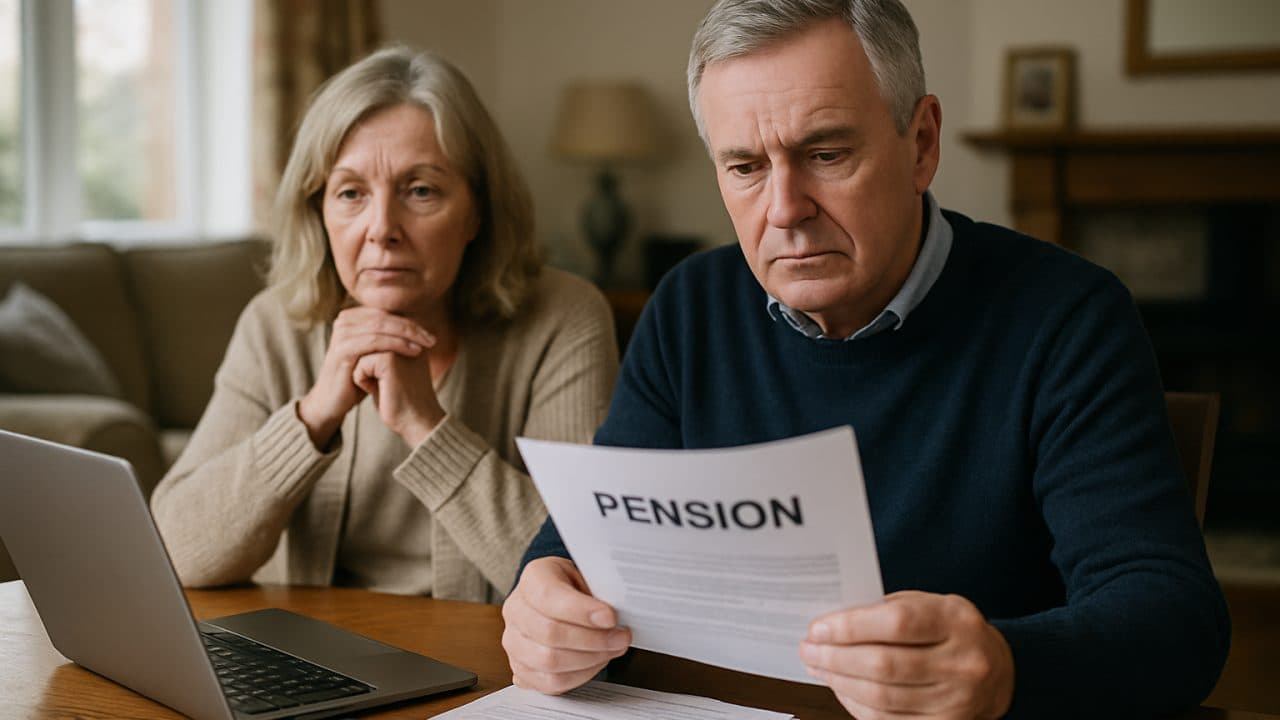
Pension Drawdown Explained: Income, Tax and Risks (2026/27)
A plain-English guide to pension drawdown: how flexi-access drawdown works, the 25% tax-free element, how withdrawals…

Pension Tax-Free Lump Sum: How the 25% Rule Works (2026/27)
You can normally take 25% of your pension as a tax-free lump sum, capped at £268,275. Here is exactly how the rule works…
Pension Salary Sacrifice: How It Works and How Much You Save
Pension salary sacrifice swaps part of your gross pay for an employer pension contribution, cutting both income tax and…
Rather someone else did it?
Partner linksFixed-fee services where a qualified accountant prepares and files your return.
TaxScouts
A real accountant files your return for one fixed fee.
Fixed fee, typically about £169 per return
Get my return doneGoSimpleTax
DIY Self Assessment software that checks for missed savings.
From about £54.99 per tax year
File it myselfWe may earn a commission if you sign up through one of these links. It never changes what we calculate, what we recommend, or the order they appear in.