

Contents
- Who this guide is for
- Key facts
- How a BR code works
- If this is you, do this (decision table)
- Real example 1: Nadia, 35, care assistant with two jobs (BR correct)
- Real example 2: Tom, 42, BR stuck on his only job (the expensive one)
- Real example 3: Marcus, 51, consultant whose BR should be D0
- What to say to HMRC (script)
- How long things take
- Action checklist
- Frequently asked questions
- Sources
Quick answer: Tax code BR ("Basic Rate") taxes every pound from that job or pension at a flat 20% with zero tax-free allowance. On a second income it is usually exactly right. On your only or main income it is a mistake that costs £209.50 a month, up to £2,514 a year, and it does not fix itself: you have to make one phone call. This guide tells you in 60 seconds which side of that line you are on, what to say to HMRC, and how the refund actually arrives.
All figures on this page are 2026/27 rates, checked against HMRC published thresholds on 27 July 2026.
Who this guide is for
| You are... | Is BR right for you? |
|---|---|
| Working one job, and it shows BR | Almost certainly wrong. You are overpaying now. Fix it this week. |
| Working two jobs, BR on the smaller one | Normally correct, if your total income stays under £50,270. |
| Higher earner with a side job on BR | Under-taxed: that income should be D0 (40%). A bill is building. |
| Drawing two pensions | BR on the second pension is standard and usually right. |
| Just changed jobs and BR appeared | Classic overlap error: HMRC briefly thinks you hold both jobs. |
| Earning under £12,570 across everything | BR wastes your allowance; ask HMRC to split it between sources. |
Key facts
| Fact | 2026/27 position |
|---|---|
| Tax applied | Flat 20% on all pay from that source |
| Personal Allowance given | £0 (assumed used against your main income) |
| Maximum cost if wrong on a main job | £2,514 a year (20% of £12,570) |
| Who can fix it | Only HMRC; employers must apply what they are sent |
| Refund route (current year) | Automatic, through payroll, after the code corrects |
| Reclaim window for past years | 4 tax years (back to 2022/23 during 2026/27) |
How a BR code works
- HMRC issues BR for a specific employment when it believes your £12,570 allowance belongs elsewhere.
- Payroll taxes every pound from that source at 20%, whatever your total income is.
- National Insurance is separate and unaffected: each job gets its own NI thresholds.
- At year end, HMRC reconciles all sources. Wrong BR on a main job shows up as an overpayment; missing D0 on a higher earner's side income shows up as a debt.
- Fixing the code mid-year triggers automatic correction: cumulative recalculation in your next pay run.
If this is you, do this (decision table)
| Situation | Meaning | Decision | Action |
|---|---|---|---|
| BR on your ONLY job | Overpaying ~£209/month | Fix immediately | Call 0300 200 3300: "this is my only employment, I need 1257L" |
| BR on second job, total income under £50,270 | Correct setup | Leave it | Nothing; re-check if either salary changes band |
| BR on second job, total OVER £50,270 | 20 points undercharged on that income | Pre-empt the bill | Ask HMRC for D0 on the second source |
| BR appeared right after a job change | Records overlap: HMRC thinks you have 2 jobs | Fix this month | Tell HMRC the old job ended; code reverts to 1257L |
| Total income under £12,570 across 2 small jobs | Allowance being wasted on BR | Split the allowance | Ask HMRC to divide it between employers (e.g. 800L + 457L) |
| BR on a second pension | Standard treatment | Verify once | Confirm total income keeps you basic-rate; then leave it |
| BR in past years that was wrong | Refund owed, not automatic forever | Claim it | Personal tax account claim; 4-year window is hard |
Real example 1: Nadia, 35, care assistant with two jobs (BR correct)
Nadia's main care job pays £22,000 (code 1257L) and weekend agency shifts pay £8,000 (code BR):
| Income | Code | Tax |
|---|---|---|
| Main job £22,000 | 1257L | (22,000 - 12,570) × 20% = £1,886.00 |
| Agency £8,000 | BR | 8,000 × 20% = £1,600.00 |
| Total £30,000 | £3,486.00, exactly what one £30,000 job would pay |
BR is doing its job: same total tax as a single job, just collected across two payrolls. Test your own combination in the second job tax calculator.
Real example 2: Tom, 42, BR stuck on his only job (the expensive one)
Tom returns to work after redundancy. His old employer's final submission lagged, HMRC briefly saw two live jobs, and his new £30,000 job got BR. Nobody noticed for 5 months:
| Item | BR (what happened) | 1257L (what should) |
|---|---|---|
| Monthly tax | £500.00 | £290.50 |
| 5 months in | £2,500.00 | £1,452.50 |
| Overpaid | £1,047.50 | |
One call fixed the code; because PAYE is cumulative, the entire £1,047.50 came back in his very next payslip, not in instalments. If this is you, quantify the damage with the overpayment checker first so you know what to expect back.
Real example 3: Marcus, 51, consultant whose BR should be D0
Marcus earns £70,000 in his main role and £15,000 from non-exec work coded BR. BR collects £3,000, but as a higher-rate taxpayer he owes 40% on that income: £6,000. Nothing feels wrong all year; then Self Assessment lands a £3,000 balancing payment plus a payment on account. Asking HMRC for D0 on the side income in April would have collected it smoothly. High earners with side income: model the real liability in the income tax calculator before the January surprise.
What to say to HMRC (script)
Phone 0300 200 3300 with your NI number and both payslips to hand, or use the HMRC app's "tax code" section:
- Only job on BR: "My employment with [employer] is my only job. It is coded BR but should be 1257L. Please correct it; I understand the refund comes through payroll."
- Job-change overlap: "I left [old employer] on [date]. Your records may show both jobs live. Please close the old employment and recode my current job to 1257L."
- Higher-rate side income: "My second income will exceed the basic rate band when combined. Please code it D0 so I am not underpaying."
- Two small jobs: "My combined income is under the Personal Allowance. Please split my allowance between the two employments."
How long things take
| Step | Typical timeline |
|---|---|
| Code corrected after call/app | 3 to 7 days to reach your employer |
| Current-year refund | In full, in the next pay run (cumulative recalculation) |
| Past-year claim online | 4 to 8 weeks to a bank transfer |
| HMRC's own year-end sweep (P800 letters) | June to November; do not rely on it |
Action checklist
- Identify the code on every payslip and pension statement you receive.
- Run the 60-second test: BR + only income = wrong; BR + second income + basic-rate total = right; BR + second income + higher-rate total = should be D0.
- Confirm with the tax code checker, then call with the script above.
- Watch the next payslip for the corrected code and the refund line.
- Check the previous 4 years for the same error; claim anything you find.
Frequently asked questions
Why has my tax code suddenly changed to BR?
HMRC has decided this income is a second source. Real triggers: starting another job or pension. False triggers: job-change overlaps and duplicate employer records. If you know it is your only income, it is the false kind; call.
How much tax do I actually pay on BR?
Exactly 20% of gross from that source: £300 a month on £1,500, £2,400 a year on £12,000. NI is worked out separately on top, using normal thresholds.
Is BR the same as emergency tax?
No. Emergency tax is 1257L W1/M1 (full allowance, non-cumulative). BR is no allowance at all. They happen in similar situations but BR on a main job is usually the more expensive of the two.
Will HMRC refund BR overpayments automatically?
Current year: yes, through payroll, once the code is fixed. Closed years: often via a P800 letter, but "often" is not "always". The 4-year claim deadline does not care whether HMRC got round to you.
My second job is on BR but I earn under £12,570 in total. Am I losing money?
Yes: 20% of everything the second job pays, needlessly. Ask HMRC to split your allowance across both jobs; it is routine and reversible.
Can BR apply to pension withdrawals?
Yes, second pensions commonly carry BR, and one-off pot withdrawals can be emergency-taxed even harder. Before drawing down, read the 25% tax-free lump sum guide; the ordering of withdrawals changes the bill.
Sources
- GOV.UK: Tax codes and what they mean (accessed 27 July 2026)
- GOV.UK: Tax on a second job (accessed 27 July 2026)
- GOV.UK: Claim a tax refund (accessed 27 July 2026)
Read next
More Taxes →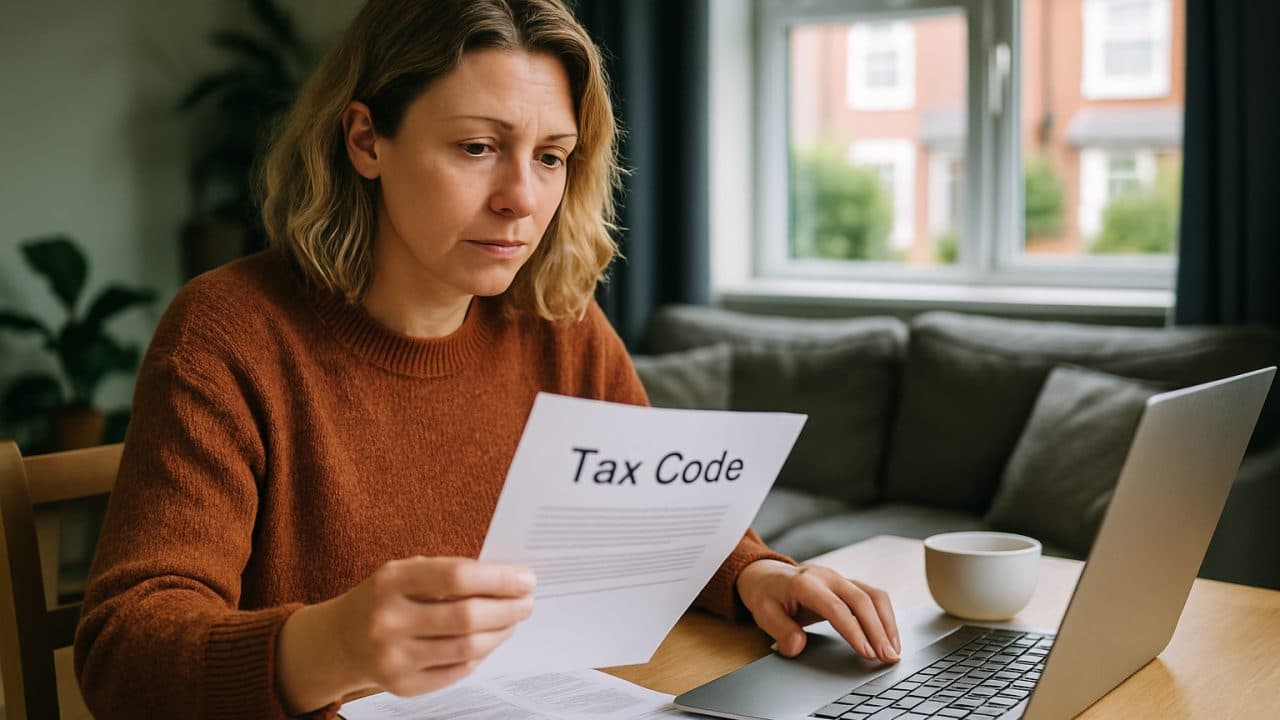
UK Tax Codes Explained: What Yours Means (2026/27)
Your tax code controls how much tax comes out of your pay. Here's what the letters and numbers mean, and how to tell if…

Tax Code 1257L: What It Means and Why You Have It (2026/27)
1257L is the standard UK tax code for 2026/27, giving the full £12,570 Personal Allowance. Here is what it means, when…
UK Income Tax Rates and Bands 2026/27: A Plain-English Guide
Understand UK income tax rates and bands for 2026/27, including the Personal Allowance, the basic, higher and additional…
Rather someone else did it?
Partner linksFixed-fee services where a qualified accountant prepares and files your return.
TaxScouts
A real accountant files your return for one fixed fee.
Fixed fee, typically about £169 per return
Get my return doneGoSimpleTax
DIY Self Assessment software that checks for missed savings.
From about £54.99 per tax year
File it myselfWe may earn a commission if you sign up through one of these links. It never changes what we calculate, what we recommend, or the order they appear in.